Scripture Focus
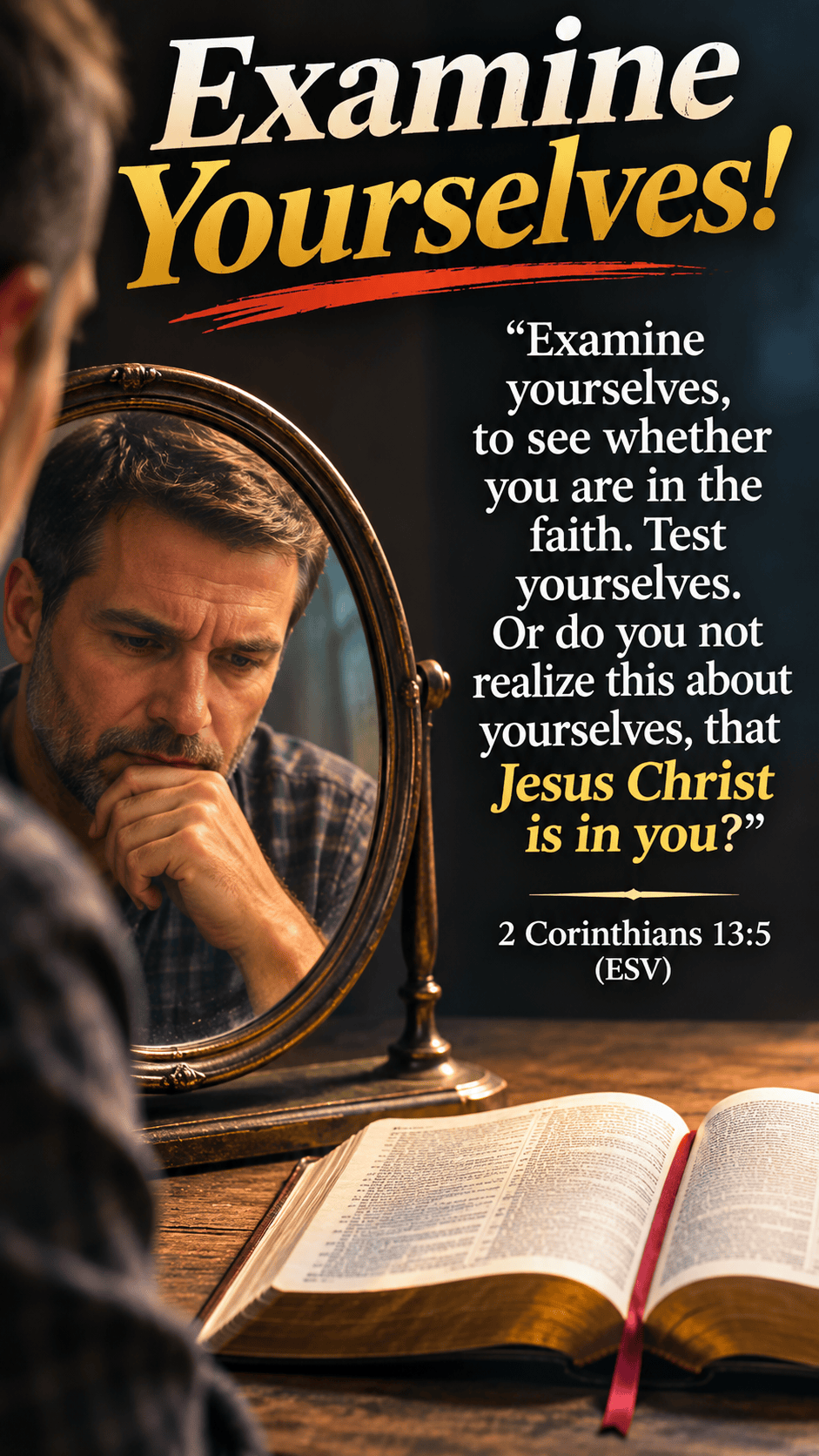
“Examine yourselves, to see whether you are in the faith. Test yourselves. Or do you not realize this about yourselves, that Jesus Christ is in you?—unless indeed you fail to meet the test!” — 2 Corinthians 13:5 (ESV)
Devotional Thought
As we approach the conclusion of Paul’s second letter to the Corinthians, we find him offering some very important advice to the believers in Corinth. Throughout much of this letter, Paul has been defending his ministry and apostleship against accusations made by individuals who were attempting to undermine his authority and influence within the church. These individuals had questioned his motives, criticized his leadership, and apparently suggested that he wasn’t the genuine apostle he claimed to be. Paul has spent considerable time responding to these accusations, not simply to defend his reputation, but because he genuinely loves these believers and wants what is best for them spiritually. Now, as he prepares to conclude his letter, Paul turns the examination around. Instead of continuing to question him, he challenges the Corinthians to examine themselves.
Think about the seriousness of the accusations that had been made against Paul. If he really were a false apostle who had deliberately deceived these believers, what would that say about his own relationship with Christ? Certainly, genuine believers can sin, make mistakes, and even mislead others. But a pattern of deliberate deception, dishonesty, and spiritual manipulation should cause us to question whether someone truly knows the Lord. Paul, however, knew where he stood with God. He had consistently demonstrated his love for the Corinthians, sacrificed for their spiritual welfare, and faithfully proclaimed the Gospel of Jesus Christ. His concern wasn’t simply whether they accepted his authority. He was concerned about what their willingness to embrace false accusations and reject the truth might reveal about their own spiritual condition.
And that brings us to Paul’s challenge: “Examine yourselves, to see whether you are in the faith. Test yourselves.” These believers had apparently become quite comfortable evaluating Paul, questioning his motives, and identifying what they believed were his shortcomings. But had they applied that same level of scrutiny to themselves? Had they honestly considered whether their own attitudes, actions, and beliefs were consistent with the faith they professed? Paul was essentially telling them that before they continued questioning his relationship with Christ, they needed to take a serious look at their own.
I believe this is something every one of us needs to hear. Have you ever noticed how easily we recognize the faults of other people while overlooking our own? When we’re involved in a disagreement or confrontation, we have an amazing ability to justify our own words and actions while magnifying the mistakes of the person with whom we disagree. We convince ourselves that our motives are pure, our intentions are honorable, and our understanding of the situation is correct. Meanwhile, we assume the worst about the other person. We may even convince ourselves that we’re defending righteousness when, in reality, we’re defending our pride.
The frightening thing is that we can become so convinced of our own righteousness that we stop considering the possibility that we might be wrong. We can deceive ourselves into believing that everything is fine spiritually, even while harboring bitterness, resentment, jealousy, pride, or an unwillingness to repent. We may continue attending church, participating in ministry, and speaking the language of faith while neglecting the most important question of all: Am I genuinely walking with Jesus Christ?
That’s why Paul’s instruction is so important. He isn’t telling the Corinthians to compare themselves with other believers or evaluate their spiritual condition according to human standards. He’s telling them to examine themselves honestly in light of the truth of the Gospel. And I believe one of the most important ways we can do that is through sincere prayer, careful consideration of God’s Word, and a willingness to allow the Holy Spirit to reveal things about ourselves that we might prefer not to see.
The psalmist expressed this attitude beautifully in Psalm 139:23–24 when he prayed, “Search me, O God, and know my heart! Try me and know my thoughts! And see if there be any grievous way in me, and lead me in the way everlasting!” (ESV). That’s the kind of honesty we need when examining ourselves. Rather than approaching God with a list of reasons why we’re right and everyone else is wrong, we should come before Him with humility, asking Him to reveal the truth about our hearts. We need to be willing to acknowledge our sins, confess our failures, and surrender whatever attitudes or behaviors are inconsistent with His will.
But notice that Paul takes this examination even deeper. He asks, “Or do you not realize this about yourselves, that Jesus Christ is in you?—unless indeed you fail to meet the test!” This isn’t merely a question about whether the Corinthians have been behaving appropriately. It’s a question about whether they genuinely belong to Jesus Christ. Is Christ truly living within them through His Spirit? Have they genuinely placed their faith in Him, or have they simply convinced themselves that they are believers because they belong to a church, know the right religious language, or participate in Christian activities?
That’s a sobering question, isn’t it? It’s possible to become so involved in the outward activities of Christianity that we neglect the reality of our relationship with Christ. We can know Scripture, understand Christian doctrine, participate in worship, and even hold positions of leadership without ever having genuinely surrendered our lives to Jesus. Religious activity is not the same thing as saving faith, and outward appearances cannot substitute for the transforming presence of Christ within us.
Now, I don’t believe Paul’s purpose here was to cause genuine believers to live in constant fear and uncertainty about their salvation. He wasn’t encouraging endless introspection or suggesting that every failure means someone isn’t saved. After all, genuine Christians still struggle with sin, experience spiritual weakness, and sometimes make serious mistakes. Our salvation rests upon the grace of God through faith in Jesus Christ, not upon our ability to live perfectly. But genuine faith produces a relationship with Christ that changes the direction of our lives. When the Holy Spirit reveals sin, a believer should be willing to acknowledge it, repent, and return to obedience.
I think that’s an important part of the examination Paul is describing. Are we willing to hear the truth about ourselves? When God’s Word confronts something in our lives, do we respond with humility and repentance, or do we immediately begin making excuses? When someone points out a genuine fault in our attitudes or behavior, do we prayerfully consider whether they might be right, or do we become defensive and look for something wrong with them instead?
Paul’s detractors had apparently become so focused on finding fault with him that they were in danger of overlooking their own spiritual condition. Some may have been genuine believers who had allowed pride and division to interfere with their relationship with Christ. Others may have needed to confront the possibility that their profession of faith wasn’t genuine at all. Either way, Paul’s instruction was the same: examine yourselves.
And perhaps that’s where we need to begin as well. Instead of spending so much time evaluating the spiritual condition of other people, we should regularly come before the Lord and ask Him to reveal the truth about our own hearts. We should examine our beliefs in light of Scripture, consider whether our lives demonstrate the transforming work of the Holy Spirit, and honestly ask whether Jesus Christ is truly the Lord of our lives.
The wonderful thing is that we don’t have to approach this examination depending entirely upon our own understanding. We can ask God to expose the self-deception we might otherwise overlook and to lead us into His truth. His Word provides the standard, His Spirit convicts us of sin, and His grace provides forgiveness and restoration through Jesus Christ.
So, before you spend another moment examining someone else’s faults, perhaps it’s time to examine your own heart. Ask the Lord to show you where you stand before Him. Be willing to hear His answer, even if it reveals something uncomfortable. And remember that the purpose of this examination isn’t simply to discover what’s wrong with us. It’s to make certain that our faith is genuinely resting in Jesus Christ.
The most important spiritual examination you’ll ever undertake isn’t an examination of someone else’s faith. It’s an honest examination of your own.
Reflection Questions
- Do you find it easier to recognize the faults and sins of others than to acknowledge your own? Why do you think that is?
- When was the last time you sincerely asked God to examine your heart and reveal anything in your life that was displeasing to Him?
- What evidence do you see in your life that Jesus Christ truly lives within you, and are you willing to respond with repentance when His Word reveals areas that need to change?
Closing Prayer
Heavenly Father, thank You for the reminder that I need to examine my own heart before becoming so concerned about the faults of others. Forgive me for the times I’ve justified my own attitudes and actions while being quick to criticize someone else. Search my heart, Lord, and reveal anything that is keeping me from walking faithfully with You. Help me to examine my life honestly in the light of Your Word and to listen when Your Holy Spirit convicts me of sin. Guard me against spiritual pride and self-deception, and give me a humble and repentant heart. Above all, help me to live each day in the assurance that Jesus Christ lives within me, and may my life reflect His transforming presence. In Jesus’ name, Amen.


Leave a Reply