Scripture Focus
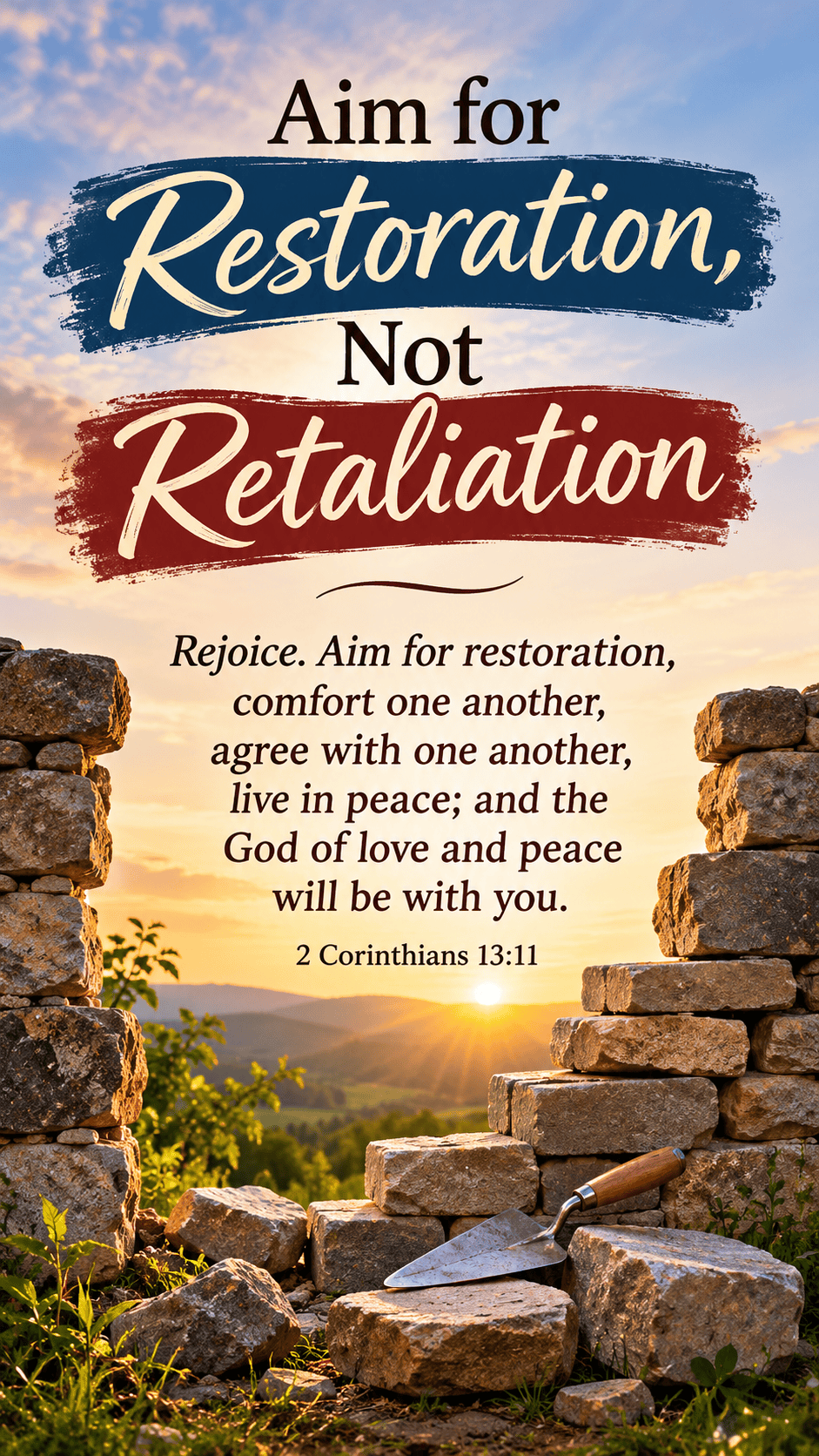
“For we are glad when we are weak and you are strong. Your restoration is what we pray for. For this reason I write these things while I am away from you, that when I come I may not have to be severe in my use of the authority that the Lord has given me for building up and not for tearing down. Finally, brothers, rejoice. Aim for restoration, comfort one another, agree with one another, live in peace; and the God of love and peace will be with you.” — 2 Corinthians 13:9–11 (ESV)
Devotional Thought
It is truly amazing to me the way Paul concludes this second letter to the church at Corinth. Throughout this letter, he has been dealing with some difficult issues that had to be very personal to the Apostle. After all, taking the Gospel to the Gentiles was his calling from God and his purpose in life. He had seen tremendous success in fulfilling that calling, but he had also endured some incredible hardships along the way. I sometimes wonder if Paul would have rather endured another thirty-nine lashes than experience the personal attacks of those whom he considered his brothers and sisters in Christ. There is something particularly painful about being attacked by the very people you have invested your life in serving.
When I read verse 9, there is a part of me that wants to read Paul’s words with a hint of sarcasm. However, Paul isn’t being sarcastic when he says that he is glad when he and his companions are weak and the Corinthians are strong. That is genuinely his preference. The sarcasm comes from my own mind and, perhaps, my own experiences. I’ve dealt with people who have made false accusations against me, even questioning my calling and my salvation. I’ll tell you, it took everything spiritual within me to keep from fighting fire with fire. I was even advised to be more aggressive in responding to some of the lies being spread about me. Defending yourself can bring out some strong emotions, anger, and passion. You want to defend your character, expose the lies, and perhaps even return a little of the pain you’ve experienced. Were it not for God’s grace, my response would have been completely wrong. Through His grace and guidance, however, I chose to allow God to defend me, and He did.
With all of that in mind, it is even more amazing to me how Paul concludes this letter. I can imagine how tempting it would have been from a human standpoint to get in a couple of final shots before bringing the letter to a close. Instead, through the inspiration of the Holy Spirit, Paul makes it abundantly clear that he loves these people. He wants them to correct the issues he has addressed, and he sincerely hopes that by the time he arrives, there will be no need for him to exercise his authority severely. He even addresses them as brothers in verse 11. Despite everything that has transpired, Paul hasn’t lost sight of who these people are or what he desires for them. He reminds them that the authority the Lord has given him is intended for building them up, not tearing them down. Paul is essentially laying his heart open before them, hoping they will receive his words in the spirit in which they were intended.
I’ve often heard it said, “People don’t care how much you know until they know how much you care.” What we’re seeing here from Paul is a living example of that principle. Paul wants restoration for the Corinthians. Above all, he wants them to be restored to a right relationship with God, but he also desires restoration in their relationships with him and with one another. He wants them to come to an agreement concerning the truth, encourage one another, and live together in peace. Considering everything we’ve learned about the Corinthian church through these two letters, accomplishing that would certainly require the work of God in their hearts. How appropriate, then, that Paul reminds them that the God of love and peace will be with them!
I believe Paul has given us a master class in conflict resolution, particularly for those who have been entrusted with positions of spiritual authority. Paul could have used his authority like a battering ram. He could have made this entire situation about vindicating himself and removing those who opposed him. Certainly, there were issues that needed to be addressed, and Paul had already demonstrated that he wasn’t afraid to confront sin within the church. However, this particular situation had the potential to cause tremendous division, destroy relationships, and do lasting damage to the church. That was the last thing Paul wanted. He wasn’t interested in winning an argument at the expense of losing his brothers and sisters. He wanted an outcome that would honor God, strengthen the church, and restore broken relationships. While Scripture doesn’t tell us exactly how every individual responded to Paul’s letter, it does preserve for us a remarkable example of what godly leadership and conflict resolution should look like.
So, how do we handle conflict with other believers? For that matter, how do we handle conflict with unbelievers? When we allow our anger and emotions to dictate our response, we may damage our Christian witness, and we may even lose a brother or sister in the process. Paul demonstrates that we can be honest without being cruel, firm without being vindictive, and compassionate without compromising the truth. We can address sin and wrongdoing while still leaving the door wide open for genuine restoration. Most importantly, we can point people toward God rather than making the conflict entirely about ourselves.
I’ve been guilty of losing my cool at times, and I’ve also experienced occasions when God graciously helped me respond in ways that were far more Christlike than my natural inclinations. My prayer is that God will use Paul’s example to teach us how to handle conflict within our families, our workplaces, and our local churches. Before we respond to someone who has wronged us, perhaps we should ask ourselves what outcome we’re truly seeking. Are we seeking to vindicate ourselves, to win an argument, or to make someone experience the pain they’ve caused us? Or are we genuinely seeking an outcome that honors God and opens the door for restoration?
The goal of godly conflict resolution is not to defeat the person standing against us, but to seek an outcome in which God is glorified, truth prevails, and broken relationships have the opportunity to be restored.
Reflection Questions
- When someone falsely accuses or mistreats you, is your natural inclination to seek restoration or retaliation?
- Have you ever allowed your desire to defend yourself to overshadow your responsibility to reflect the character of Christ?
- If God has entrusted you with a position of authority, are you using that authority primarily to build others up?
- Is there a broken relationship in your life for which you need to begin sincerely praying for restoration?
- How might your approach to conflict change if glorifying God became more important to you than winning the argument?
Closing Prayer
Heavenly Father, thank You for the example You have given us through the Apostle Paul. Forgive us for the times we’ve allowed our anger, pride, and hurt feelings to determine how we respond to others. Help us to speak the truth with grace, exercise authority with humility, and confront wrongdoing with a genuine desire for restoration. Give us the wisdom to know when to speak, the self-control to know when to remain silent, and the faith to trust You with our defense. May our responses to conflict reflect the character of Jesus Christ and point others toward You. Help us to desire the spiritual well-being of others more than our own vindication. May You, the God of love and peace, bring healing and restoration to our families, our relationships, and our churches. In Jesus’ name, Amen.


Leave a Reply