Scripture Focus
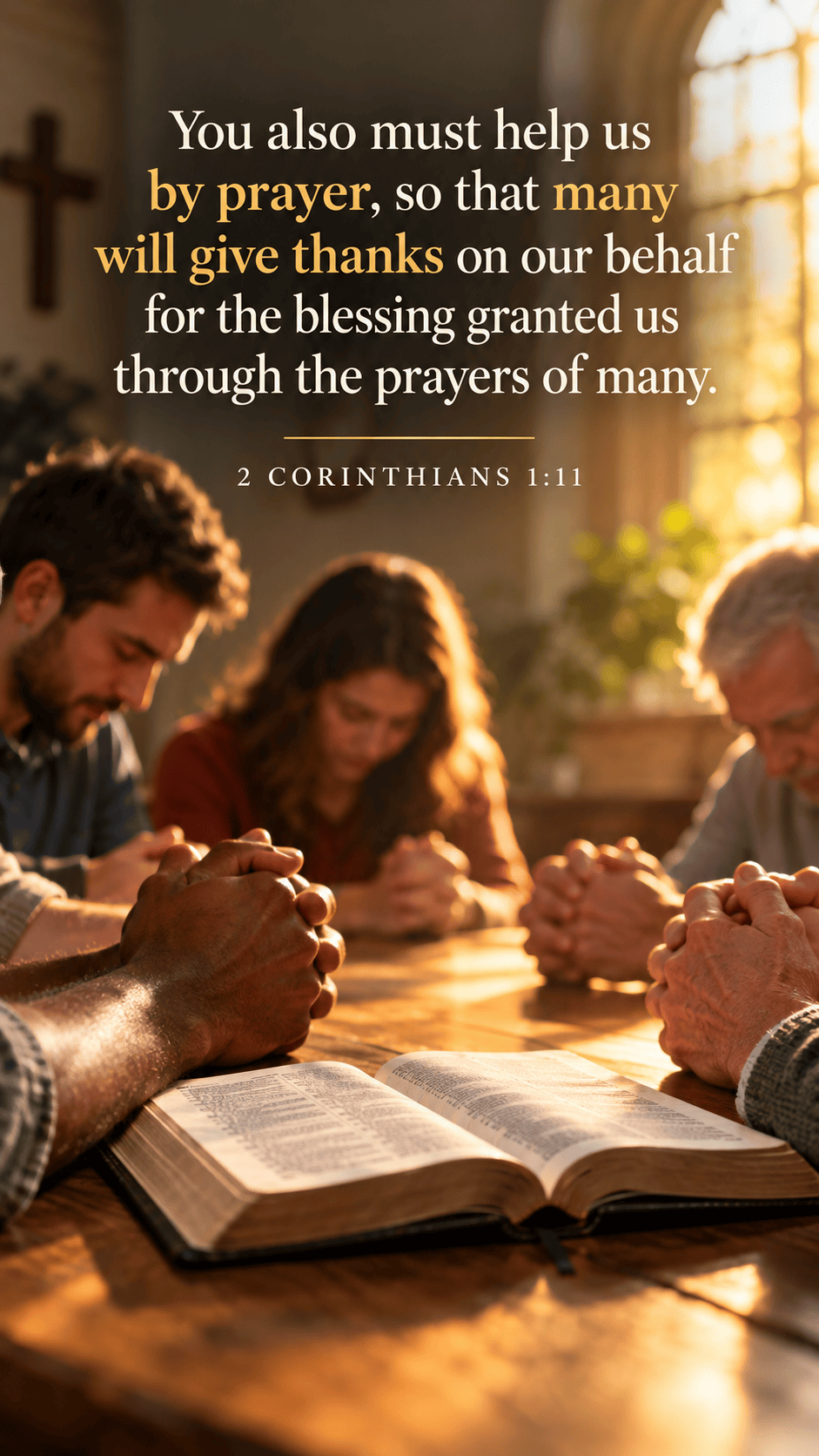
“You also must help us by prayer, so that many will give thanks on our behalf for the blessing granted us through the prayers of many.” — 2 Corinthians 1:11 (ESV)
Devotional Thought
If ever there were a verse of Scripture that ought to be posted beside the announcement of the church’s weekly prayer meeting, this might be it. In fact, perhaps we ought to put it on the wall of the room where the church gathers to pray. What Paul says here in a single verse is both powerful and profound, and I fear we sometimes overlook the significance of what he is teaching us about the prayers of God’s people.
If you’ve been a believer for any length of time, you probably recognize the importance of prayer in your personal walk with Christ. Prayer is one of the most meaningful and intimate ways we commune with our heavenly Father. From the moment we first cry out to Him for salvation until the final prayers we offer in this life, prayer remains an essential part of our relationship with God. Through prayer, we bring Him our burdens, confess our sins, express our gratitude, and seek His wisdom and guidance. But here Paul reminds us that prayer is not merely an individual activity. It is also one of the great privileges and responsibilities we share as members of the body of Christ.
Remember the context of Paul’s words. In the preceding verses, he has described the terrible affliction he experienced in Asia, an experience so overwhelming that he and his companions despaired of life itself. Yet through that suffering, God taught them to rely not on themselves but on the God who raises the dead. Paul has already testified to God’s deliverance and expressed his confidence that God will continue to deliver him. Then he turns to the Corinthian believers and makes this remarkable request: “You also must help us by prayer.” Think about that for a moment. The Apostle Paul, a man who had experienced extraordinary revelations from God and witnessed His miraculous power, was asking ordinary believers in the church at Corinth to help him through their prayers. He understood something we would do well to remember: no Christian, regardless of spiritual maturity, position, or experience, is beyond the need for the prayers of fellow believers.
But notice that Paul doesn’t stop with his request for prayer. He goes on to explain what will happen when God answers those prayers. The blessing granted to him through the prayers of many will result in many people giving thanks to God. In other words, Paul sees something much greater than his own personal deliverance. He sees an opportunity for the glory of God to be magnified through the prayers and praises of His people. When many believers join together in prayer and God graciously answers, the result is not simply one person receiving a blessing. It is many people recognizing God’s faithfulness and offering Him thanksgiving and praise.
John Calvin makes this very observation in his commentary on this verse. He explains that Paul sees a second benefit arising from the Corinthians’ prayers: a greater manifestation of God’s glory. When God answers the prayers of many on behalf of one person, those many believers have reason to join together in thanksgiving. Calvin also reminds us that we should never allow any blessing from God to pass without offering Him praise, especially when He has graciously answered our prayers. And that thanksgiving should not be limited to blessings we personally receive. We ought to rejoice just as sincerely when God answers our prayers on behalf of someone else.
Consider what this means for the life of the church. When we gather to pray for someone who is sick, struggling, grieving, or facing an overwhelming burden, we are doing far more than sharing information about that person’s circumstances. We are joining together in an act of faith, bringing the needs of a brother or sister before the throne of grace. And when God answers those prayers, we have an opportunity to rejoice together in His goodness. The person for whom we prayed receives the blessing of knowing that others have carried the burden with them. Those who prayed are encouraged as they witness God’s faithfulness. The entire congregation is strengthened as testimonies of answered prayer are shared. And above all, God receives the glory and praise that belong to Him alone.
Now, we must be careful not to misunderstand Paul’s words. He is not suggesting that God is more likely to answer a prayer simply because a larger number of people are praying. Prayer is not a popularity contest, and God is not persuaded by the size of the crowd. Nor does corporate prayer guarantee that God will answer every request in precisely the way we desire. Our confidence rests in the goodness, wisdom, and sovereignty of our heavenly Father, not in the number of voices making a request. But Paul does teach us that when many believers participate in prayer, many can also participate in the thanksgiving that follows God’s gracious answer. The blessing is shared, faith is strengthened, and praise is multiplied.
I wonder if we’ve lost sight of this in some of our churches. We understand the importance of gathering for worship, Bible study, and fellowship, but have we forgotten the extraordinary privilege of gathering for prayer? Perhaps we’ve allowed our prayer meetings to become little more than an exchange of requests, followed by a brief prayer before everyone goes home. Yet Paul presents a much richer picture. Corporate prayer is an opportunity for the church to bear one another’s burdens, express our dependence upon God, and prepare our hearts to celebrate His faithfulness together. And when God’s answer is different from what we requested, we can still encourage one another to trust His wisdom and give thanks for His sustaining grace.
There’s something else here that I don’t want us to miss. When we pray for one another, we become participants in one another’s lives in a way that goes far beyond ordinary friendship. We share in the burdens, we share in the waiting, and we share in the rejoicing. The one being prayed for is blessed, those offering the prayers are blessed, and the congregation is strengthened through the experience. And as thanksgiving rises from many hearts, God is glorified. What a beautiful picture of the body of Christ functioning as God intended!
So perhaps we really should put 2 Corinthians 1:11 on the wall of our prayer meeting room. Not simply as a reminder that we ought to pray, but as a reminder of what God accomplishes when His people pray together. Every prayer offered on behalf of another believer is an opportunity to demonstrate our love, exercise our faith, and ultimately bring glory to our heavenly Father.
When many pray, many have reason to give thanks. And when many give thanks, God receives the glory.
Reflection Questions
- How often do you pray for the needs of fellow believers, and do you recognize your prayers as a meaningful way of helping them?
- When God answers a prayer offered on behalf of someone else, do you take time to thank Him and share in that person’s joy?
- How might your church’s prayer meetings change if everyone approached them as opportunities not only to bring requests before God but also to celebrate His faithfulness together?
Closing Prayer
Heavenly Father, thank You for the wonderful privilege of prayer and for the brothers and sisters in Christ who faithfully lift one another before Your throne. Forgive us when we treat prayer as little more than a routine or fail to recognize the blessing of praying together as Your people. Teach us to bear one another’s burdens, to trust You with every request, and to rejoice when we see Your hand at work. Strengthen our faith as we pray together, and help us never to overlook an opportunity to give You thanks. May our churches become places where prayers are offered faithfully, burdens are shared willingly, and Your name is glorified continually. In Jesus’ name, Amen.


Leave a Reply