Scripture Focus
“He was fed grass like an ox, and his body was wet with the dew of heaven, until he knew that the Most High God rules the kingdom of mankind and sets over it whom he will. And you his son, Belshazzar, have not humbled your heart, though you knew all this, but you have lifted up yourself against the Lord of heaven.”
— Daniel 5:21b–23a (ESV)
Devotional Thought
When I was a boy, there was a phrase we kids heard that told us immediately we were in significantly more trouble than normal: “You should know better.” Parents understand the difference. There is childish foolishness that comes from immaturity or impulsiveness, and then there is disobedience from someone who knows exactly what he is doing. The offense becomes more serious when the person has already been warned, has seen the consequences, and chooses to do it anyway. That is what makes Daniel 5 so sobering.
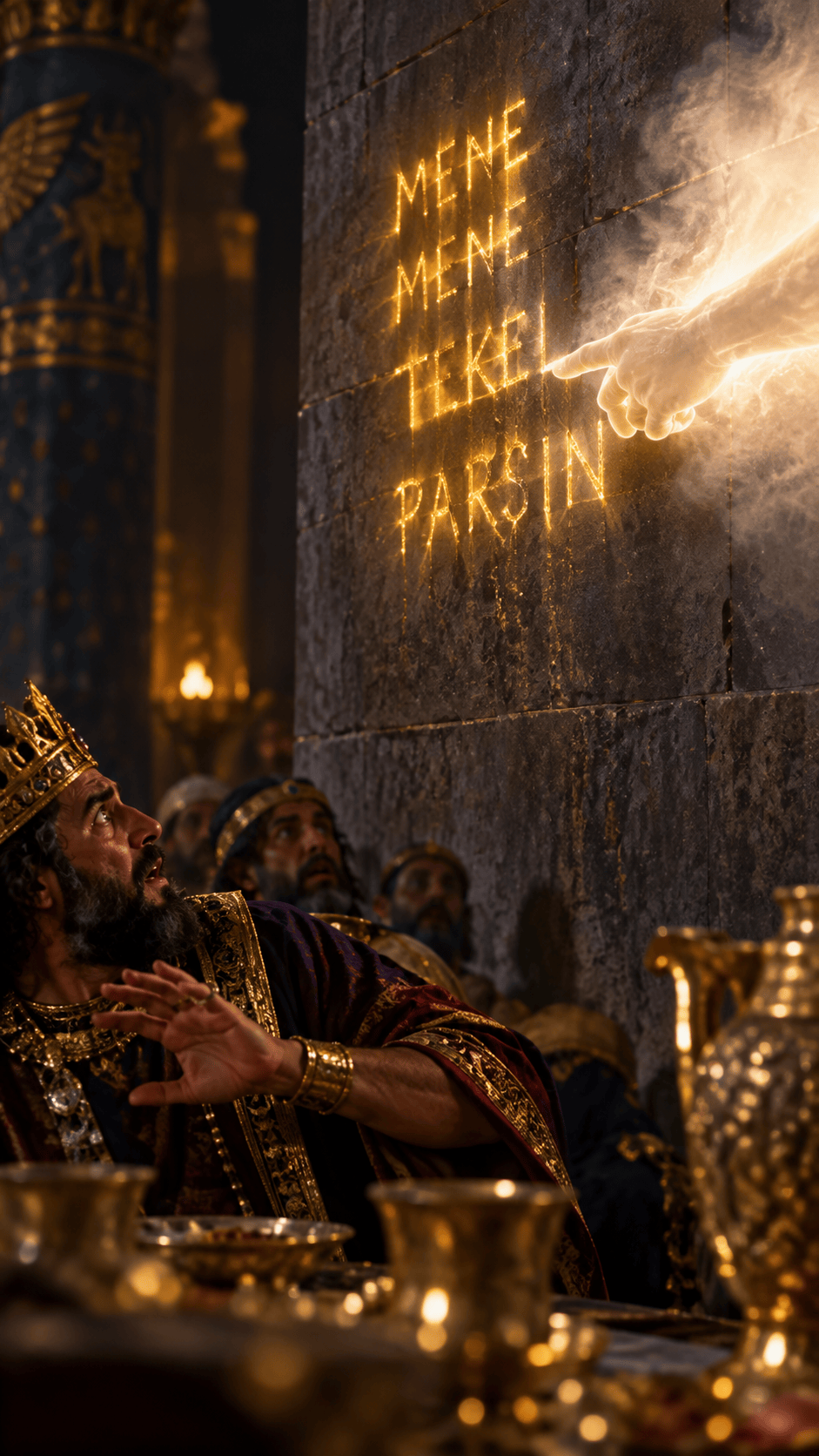
Belshazzar held a great feast for a thousand of his lords. As the wine flowed, he ordered that the gold and silver vessels Nebuchadnezzar had taken from the temple in Jerusalem be brought into the banquet. Belshazzar, his officials, his wives, and his concubines drank from vessels that had been set apart for the worship of God. At the same time, they praised their gods of gold, silver, bronze, iron, wood, and stone. This wasn’t merely a drunken party. Belshazzar was openly dishonoring the God of heaven.
Then a human hand suddenly appeared and began writing on the wall. Belshazzar was terrified. Three times in the chapter—verses 6, 9, and 10—we are told that the king’s color changed. Daniel tells us that his thoughts alarmed him, his limbs gave way, and his knees knocked together. Perhaps part of the reason for his terror was that Belshazzar knew exactly what he had done.
When Daniel was finally brought before the king, he reminded Belshazzar of Nebuchadnezzar. Nebuchadnezzar had become proud and arrogant, and God had humbled him dramatically. He was driven away from mankind and lived like an animal until he finally recognized that “the Most High God rules the kingdom of mankind and sets over it whom he will.” Belshazzar knew that story. He knew about Nebuchadnezzar’s pride. He knew about his humiliation. He knew how God had brought that powerful king low. And he knew that Nebuchadnezzar had eventually acknowledged the sovereignty of the Most High God.
That is why Daniel’s next words are so devastating: “And you his son, Belshazzar, have not humbled your heart, though you knew all this.” In other words, You should have known better. Belshazzar had been given something Nebuchadnezzar did not have at the beginning of his story: an example. He had already seen where pride led. He had seen what happened when a king exalted himself against God. He had witnessed the consequences, and yet he deliberately walked down the same road. In fact, he went even further. He took vessels dedicated to the Lord and used them while praising idols. He lifted himself up “against the Lord of heaven.” He knew better, but he did it anyway.
That makes this passage uncomfortable for us, because there are things about which we should know better too. We have seen what pride can do. We have watched bitterness destroy relationships. We have seen greed consume people. We have watched secret sins eventually become public disasters. We have seen families damaged by choices that once seemed small. Sometimes we have even experienced the consequences ourselves.
Most importantly, we have something Belshazzar did not have: the completed Word of God. We have been shown again and again where sin leads. We have seen God’s warnings, His discipline, His mercy, and His grace. The question is whether we will learn from what we have been shown. Belshazzar could have looked at Nebuchadnezzar’s life and learned humility. Instead, he repeated his pride.
Before that night was over, the writing was on the wall. His kingdom was taken from him, and Belshazzar was killed. There comes a point when knowing the truth carries with it a responsibility to respond to the truth. God graciously gives us warnings. He gives us His Word. He gives us examples from Scripture. Sometimes He even allows us to see the consequences of sin in the lives of people around us. We should not waste those warnings. Sometimes the most loving thing God can say to us is also one of the most sobering: You know better. Now live like you know better.
Reflection Questions
- Are there areas of my life where I already know what God’s Word says but continue to resist or ignore it?
- What lessons has God allowed me to learn by watching the choices and consequences of others?
- Have I repeated patterns of sin that I have already seen bring pain or destruction?
- Is there something God has already made clear to me that requires repentance or obedience today?
Closing Prayer
Father, thank You for the warnings You give me through Your Word and through the examples of those who have gone before me. Forgive me for the times I have known what is right and chosen my own way anyway. Keep me from the pride that refuses to learn and the stubbornness that ignores Your warnings. Give me a humble heart that listens, learns, repents, and obeys. Help me not only to know the truth, but to live according to what You have shown me. In Jesus’ name, amen.


Leave a comment