Scripture Focus
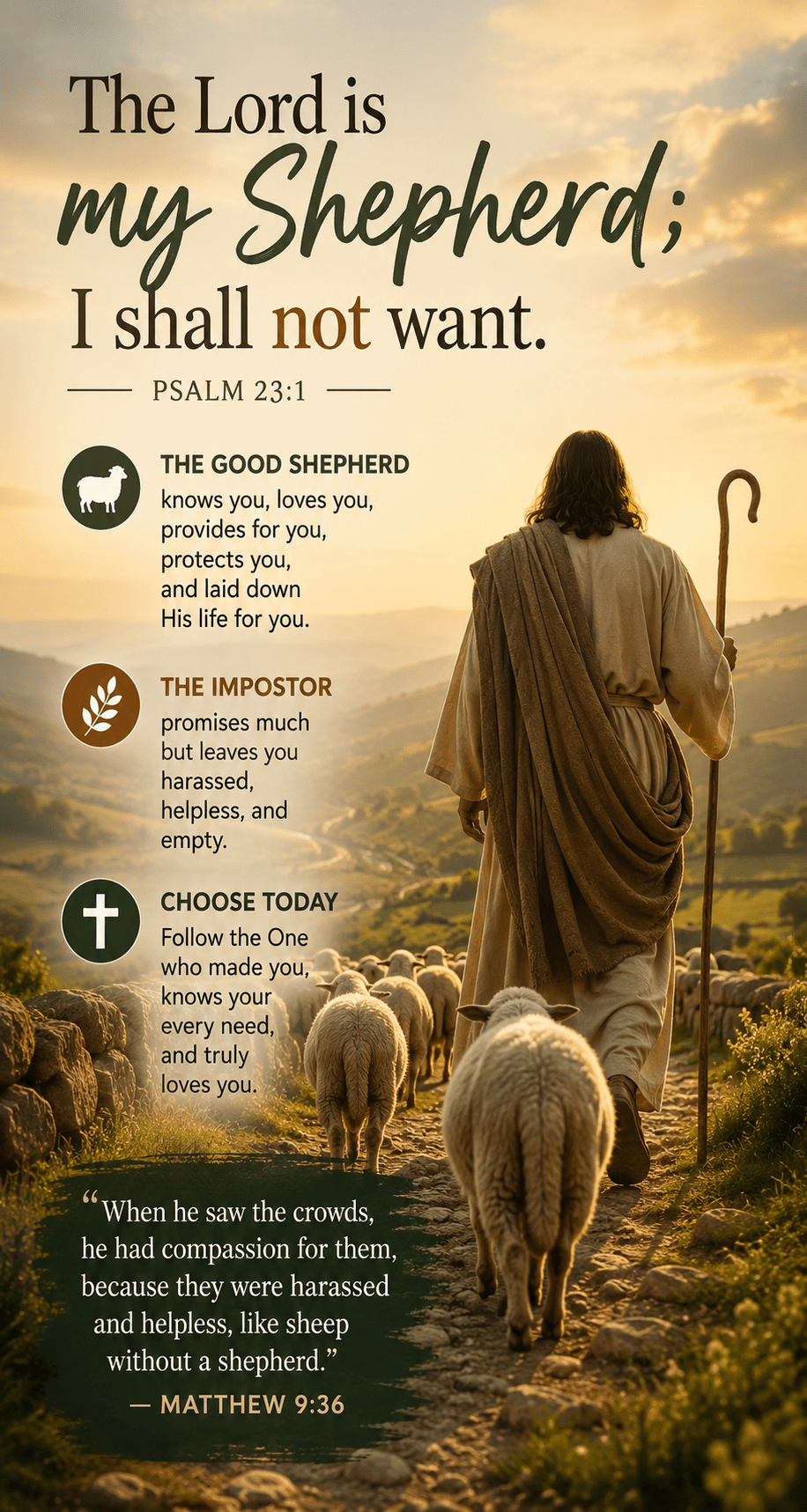
“The Lord is my shepherd; I shall not want.” — Psalm 23:1 (ESV)
“When he saw the crowds, he had compassion for them, because they were harassed and helpless, like sheep without a shepherd.” — Matthew 9:36 (ESV)
Devotional Thought
This week at camp our theme is “The Good Shepherd,” and we are spending time studying Psalm 23 together. Tonight’s message focused on just the first verse, but what a rich and powerful verse it is. “The Lord is my shepherd; I shall not want.”
It is no accident that Scripture frequently compares people to sheep. Sheep are easily led astray. They are vulnerable to predators. They often wander into danger without realizing it. They need guidance, protection, and provision. In many ways, we are exactly the same.
That leads us to an important question: Who is my shepherd?
Every person is following someone or something. We are all being led by a voice, a philosophy, a desire, an ambition, or a leader. The question is not whether we are following. The question is who we are following.
Jesus described Himself as the Good Shepherd. He is the Shepherd who knows His sheep, calls them by name, and lays down His life for them. No other shepherd has ever done that. No other leader loves us the way Christ does because no one else created us, knows us completely, and willingly died to save us. Yet how often do we follow impostor shepherds?
The world constantly offers substitutes. It promises fulfillment through success, pleasure, wealth, popularity, achievement, or self-gratification. But these false shepherds always lead us toward selfish ends by selfish means. They use us while we are useful and abandon us when we have nothing left to give.
Jesus saw the result of following false shepherds in Matthew 9:36. Looking at the crowds, He had compassion on them because they were “harassed and helpless, like sheep without a shepherd.”
What a description of life apart from Christ!
They were harassed—mistreated, frustrated, wounded, and burdened.
They were helpless—unable to care for themselves spiritually and unable to find the answers they desperately needed.
That is exactly what false shepherds produce. They make grand promises but leave people empty, exhausted, and broken.
In contrast, David declares, “The Lord is my shepherd; I shall not want.”This is a statement of faith. David is not saying he will receive everything he desires. He is saying that under the care of the Good Shepherd, he will lack nothing that is truly needed. The Shepherd who created him knows exactly what is best for him and will faithfully provide it.
If the Lord is your Shepherd, you can trust His leadership, His protection, and His provision. He knows your needs better than you do. He sees dangers you cannot see. He loves you more deeply than you can imagine.
So ask yourself today: Who is your shepherd? There is only one Shepherd who genuinely loves His sheep, laid down His life for them, and promises to lead them safely home. Do not follow the impostors who cannot deliver what they promise. Follow the Good Shepherd.
Reflection Questions
1. Who or what most influences the direction of my life right now?
2. In what ways have I been tempted to follow the promises of the world instead of the leadership of Christ?
3. What does the statement “I shall not want” teach me about trusting God’s provision?
4. How can I more intentionally follow the voice of the Good Shepherd this week?
Closing Prayer
Lord Jesus, thank You for being the Good Shepherd who loves Your sheep perfectly. Forgive me for the times I have listened to other voices and followed paths that lead away from You. Help me to trust Your leadership, rest in Your provision, and follow wherever You lead. Thank You for laying down Your life for me and caring for me every day. Teach me to recognize Your voice and walk faithfully in Your ways. In Your name I pray, amen.


Leave a Reply