Scripture Focus
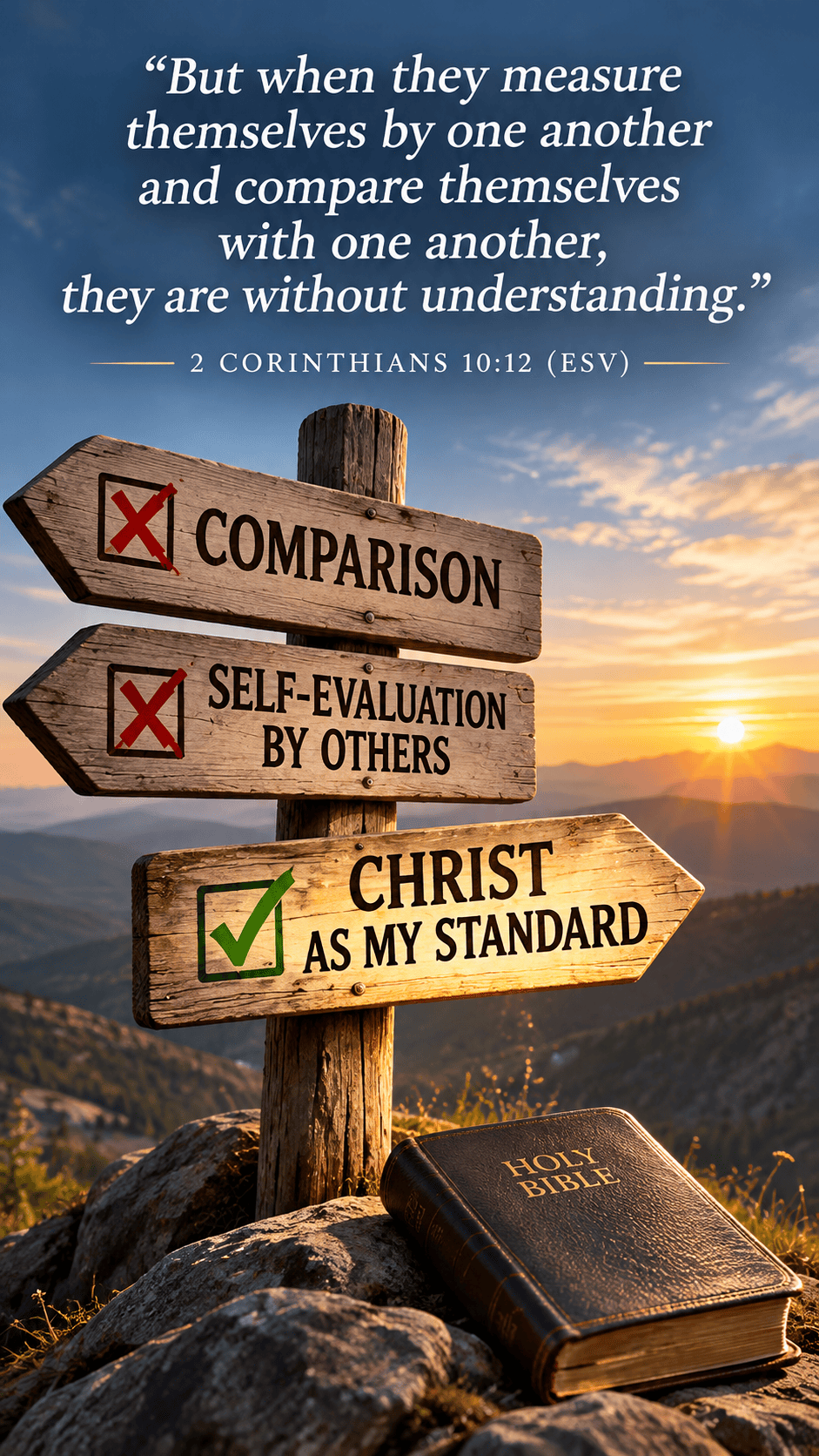
“Not that we dare to classify or compare ourselves with some of those who are commending themselves. But when they measure themselves by one another and compare themselves with one another, they are without understanding.” — 2 Corinthians 10:12 (ESV)
Devotional Thought
As we continue through Paul’s second letter to the Corinthians, we find him addressing an issue that goes much deeper than the criticisms being leveled against his ministry. Paul had been dealing with individuals who questioned his authority, criticized his leadership, and apparently believed themselves to be better qualified to lead the church than he was. They looked at Paul’s outward appearance, his manner of speaking, and his personal presence and concluded that he wasn’t nearly as impressive as they were. In their minds, they were better leaders, more authoritative speakers, and more deserving of the church’s respect. But Paul identifies a fundamental problem with their entire way of thinking. They were evaluating themselves by comparing themselves with other people, and Paul says that those who do such things are without understanding.
Now, before we go any further, perhaps we should understand something about Paul’s position in the early church. Paul wasn’t simply a pastor who happened to have started several churches. He was an apostle, personally called and commissioned by Jesus Christ. The word apostle means “sent one,” and the apostles held a unique responsibility in establishing the foundation of the early church, proclaiming the Gospel, planting churches, and exercising authority that extended beyond a single congregation. A pastor, on the other hand, is called to shepherd a particular congregation, feeding believers through the teaching of God’s Word, protecting them from false teaching, and caring for their spiritual needs. Both roles involve spiritual leadership, but the apostles occupied a unique place in the establishment of the church. Paul’s authority didn’t come from his impressive appearance, his speaking ability, or his standing in the community. It came from Jesus Christ, who had called him and sent him.
But Paul’s opponents weren’t evaluating his ministry according to God’s calling. They were evaluating him according to their own standards. They apparently believed that a leader should be impressive, commanding, and outwardly powerful. Since Paul didn’t meet their expectations, they concluded that they were superior to him. And that brings us to the real problem Paul addresses in this passage. When we make other people the standard by which we evaluate ourselves, we have already chosen the wrong standard.
Unfortunately, this kind of thinking isn’t limited to the church at Corinth. It can happen in any church, and it can happen in our own lives. Sometimes people assume that someone should be a leader in the church because they’re prominent in the community, financially successful, well educated, or particularly outspoken. Perhaps they have a commanding personality or the ability to persuade others to follow their opinions. But none of those qualities, by themselves, establishes that someone is spiritually qualified to lead God’s people. Scripture teaches us that leadership in the church should be based on God’s calling, spiritual maturity, biblical qualifications, and the gifts the Holy Spirit has given to believers. Who has been gifted to teach? Who demonstrates wisdom and discernment? Who has a heart for shepherding God’s people? Who demonstrates the character and humility that Scripture requires of those who lead?
When a church begins choosing its leaders based primarily on worldly standards, it places itself in a dangerous position. Instead of seeking God’s direction, the congregation may begin following the preferences and personalities of influential individuals. Instead of asking what Scripture teaches, people begin asking what certain members want. Instead of following Christ, they end up following men. And when that happens, the church can easily lose sight of the very One it exists to worship and serve.
But there’s another side to this comparison game, and I believe it’s one that affects every one of us. We have a natural tendency to evaluate ourselves by looking at other people. We want to know how we’re doing, so we look around and find someone with whom we can compare ourselves. Perhaps we look at someone who seems to have more problems than we do, someone whose behavior is worse than ours, or someone whose failures are more obvious. Then we reassure ourselves that we’re doing pretty well. After all, we’re not nearly as bad as that person!
The problem is that the comparison game is remarkably easy to win when we’re allowed to choose the people we compare ourselves with. There will almost always be someone whose behavior seems worse than ours. There will almost always be someone who has made more serious mistakes, demonstrated poorer judgment, or committed sins that we haven’t committed. But what does that actually prove? Does being better than someone else mean that we’re righteous before God? Does being more faithful than another believer mean that we’re as faithful as God has called us to be? Of course not!
I’ve encountered this same way of thinking many times when talking with unbelievers about faith in Jesus Christ. When the subject of salvation comes up, people will often tell me that they believe they’re going to heaven because they’re basically good people. They haven’t murdered anyone. They haven’t robbed a bank. They haven’t committed some terrible crime. They try to treat people fairly, take care of their families, and live decent lives. And compared with some of the people they see around them, they probably do look pretty good.
But here’s the problem. God doesn’t determine our righteousness by comparing us with the worst people we can find. Romans 3:23 tells us, “for all have sinned and fall short of the glory of God.” The standard isn’t the person down the street, the criminal on the evening news, or even the most faithful Christian we know. The standard is the perfect holiness and righteousness of Jesus Christ. And when we measure ourselves against that standard, every one of us falls short.
That’s why salvation cannot be earned through our own goodness. If being better than someone else were enough to make us righteous, then perhaps we could find someone whose failures made us look acceptable. But Scripture teaches us that we are sinners in need of a Savior, not merely imperfect people who need to improve our standing in comparison with others. Our only hope is the grace of God through faith in Jesus Christ, who lived the sinless life we could never live and gave Himself for our sins.
And for those of us who already belong to Christ, the principle remains the same. We aren’t called to compare ourselves with other believers to determine whether we’re doing enough. We’re called to follow Jesus. We’re called to grow in holiness, exercise the gifts God has given us, and faithfully fulfill the responsibilities He has entrusted to us. Romans 12:3 reminds us not to think of ourselves more highly than we ought, but to think with sober judgment. That means recognizing both our strengths and our weaknesses with humility, remembering that whatever gifts and abilities we possess have come from God.
There’s something else worth considering. Comparison doesn’t always lead to pride. Sometimes it leads to discouragement. We look at someone who seems more gifted, more successful, or more spiritually mature than we are, and we begin to believe that we have little to offer. But that’s simply the other side of the same mistake. Whether comparison causes us to think too highly of ourselves or too poorly of ourselves, we’re still allowing other people to determine our understanding of who we are and what God has called us to do.
Paul’s words are a powerful reminder that we need a different standard. We don’t need to be better than someone else, and we don’t need to become someone else. We need to become more like Jesus Christ. We need to evaluate our lives in light of His Word, submit ourselves to His authority, and faithfully serve Him with whatever gifts and opportunities He has given us.
The comparison game may be easy to win, but winning it doesn’t mean we’ve accomplished anything worthwhile. As Paul says, those who measure themselves by one another are without understanding. They’ve misunderstood what really matters.
The question isn’t whether I’m better than someone else. The question is whether I’m becoming more like Jesus.
And that’s a question every one of us needs to ask.
Reflection Questions
- Have you ever evaluated your own spiritual maturity by comparing yourself with someone whose behavior seemed worse than yours? What does Scripture teach us about that kind of comparison?
- How can comparing ourselves with others lead either to pride or to discouragement? Have you experienced both?
- When considering spiritual leadership in the church, are we more influenced by outward appearances and worldly success or by biblical qualifications and spiritual gifts?
- What would change in your daily life if you spent less time comparing yourself with others and more time seeking to become like Jesus Christ?
Closing Prayer
Heavenly Father, forgive me for the times I’ve measured myself against other people instead of looking to You and Your Word. Forgive me when I’ve allowed comparison to fill my heart with pride, and forgive me when I’ve allowed it to convince me that I have nothing worthwhile to offer. Help me to see myself with humility and honesty, recognizing both my need for Your grace and the gifts You have entrusted to me. Give Your church wisdom to recognize and follow godly leadership rather than being impressed by worldly standards of success and influence. And Lord, help those who are trusting in their own goodness to recognize their need for Jesus Christ. May my desire never be simply to be better than someone else, but to become more like Your Son each day. In Jesus’ name, Amen.


Leave a Reply