Scripture Focus
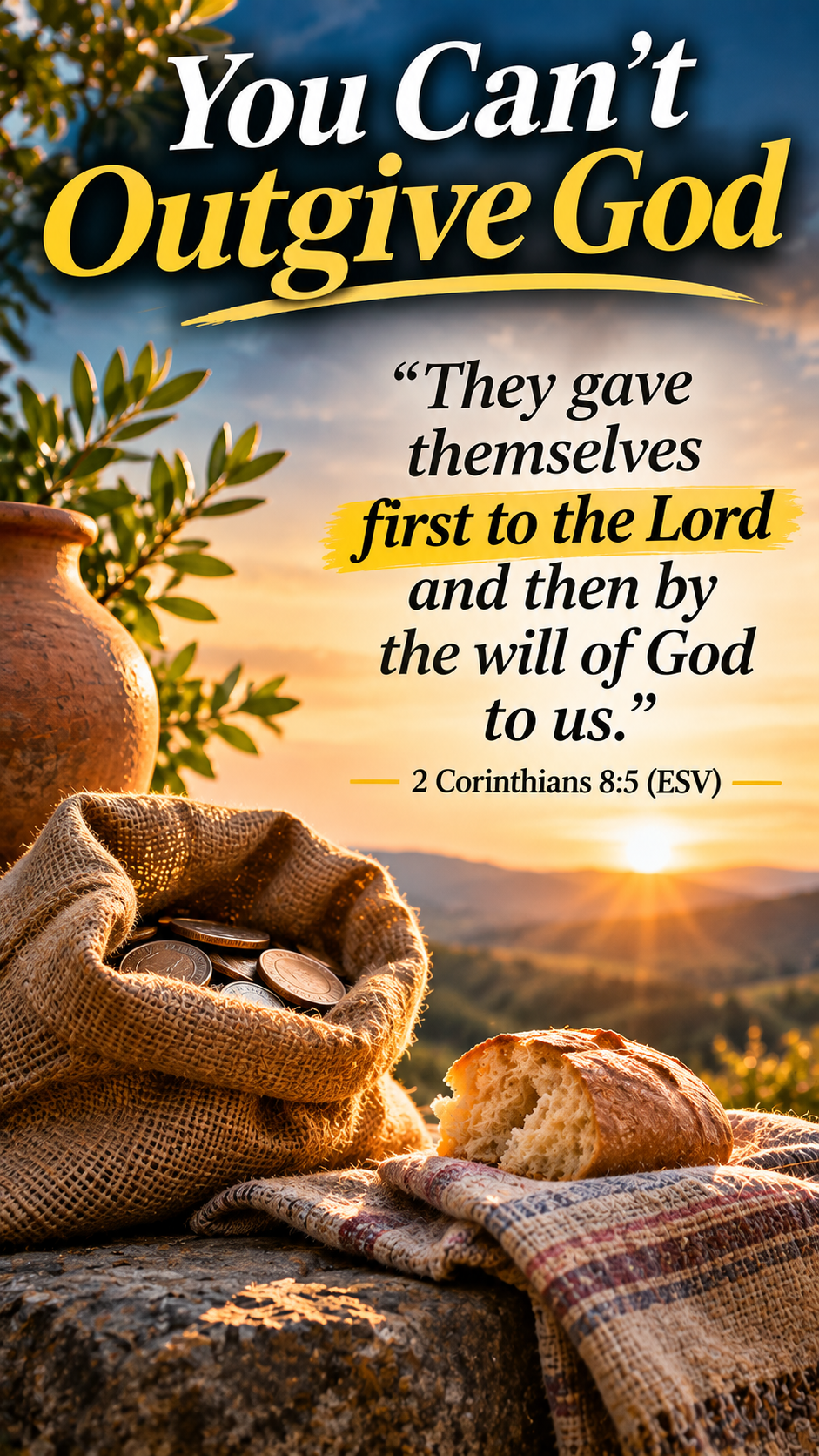
“We want you to know, brothers, about the grace of God that has been given among the churches of Macedonia, for in a severe test of affliction, their abundance of joy and their extreme poverty have overflowed in a wealth of generosity on their part. For they gave according to their means, as I can testify, and beyond their means, of their own accord, begging us earnestly for the favor of taking part in the relief of the saints—and this, not as we expected, but they gave themselves first to the Lord and then by the will of God to us.” — 2 Corinthians 8:1–5 (ESV)
Devotional Thought
As we move into chapter 8 of Paul’s second letter to the Corinthians, we come to a story that has always made a tremendous impression on me. Paul begins telling the Corinthians about the extraordinary generosity of the churches in Macedonia. These believers were experiencing severe affliction and extreme poverty, yet somehow they had developed a remarkable reputation for giving. In fact, Paul describes their generosity in terms that almost seem contradictory. He says that their abundance of joy and extreme poverty had overflowed into a wealth of generosity. How does someone living in extreme poverty demonstrate a wealth of generosity? That’s exactly what makes this passage so remarkable.
Paul was encouraging the Corinthians to participate in a collection being gathered for believers in need, particularly the saints in Jerusalem. To illustrate what genuine generosity looks like, he pointed to the Macedonian churches. These believers hadn’t simply responded to a request for assistance. According to Paul, they had actually begged for the opportunity to participate! They gave according to their means and even beyond their means, entirely of their own accord. They weren’t being pressured or manipulated into giving. They genuinely wanted to help, and they considered the opportunity to give a privilege rather than an obligation.
Think about that for a moment. Most of us understand what it means to give when someone asks for help. We recognize a need, consider what we can afford, and decide how much we’re willing to contribute. But these Macedonian believers went far beyond that. They were so eager to participate in God’s work that they practically pleaded for the opportunity to give. And they did so while facing serious financial difficulties of their own. Their generosity wasn’t the result of having an abundance of money. It was the result of having an abundance of joy in the Lord.
Over more than 36 years of ministry, I’ve encountered a few individuals who remind me of these Macedonian believers. I’m talking about people who seem to possess what Scripture identifies as the spiritual gift of giving. Romans 12:8 includes generosity among the gifts God distributes to His people, and while every believer is called to give, some seem to have an extraordinary desire and ability to give far beyond what anyone would expect.
I’ve known a few people like that. They gave so much and so often that, from a human perspective, it almost didn’t make financial sense. They weren’t looking for recognition, either. In fact, they often went to considerable lengths to remain anonymous. Sometimes I learned about their generosity because someone with firsthand knowledge told me what they had done. Other times I discovered it because I was personally on the receiving end of an unexpected gift. But what impressed me most wasn’t simply the amount they gave. It was the joy they seemed to experience in giving it away.
And here’s something else I’ve observed about those individuals. God seemed to continually bless them with more opportunities and resources to give. I’ve heard people say, “You can’t outgive God,” and in my experience, there’s a great deal of truth in that statement. These individuals would give generously, and somehow God would continue providing for them. Then they would turn around and give again. It was almost as though the blessings God entrusted to them were never intended to stop with them. They were simply passing those blessings along to others.
Now, I want to be careful about something here. I’m certainly not suggesting that generosity is some kind of get-rich-quick scheme. Unfortunately, there are people who have twisted biblical teaching about giving into the idea that if you give God a certain amount of money, He is obligated to give you even more in return. That’s not what Paul is teaching, and it’s certainly not what motivated the Macedonian believers. They weren’t giving because they expected to become wealthy. In fact, Paul specifically tells us that they were already experiencing extreme poverty!
The purpose of giving is not to get more for ourselves. It’s to honor God and bless others with what He has entrusted to us. God may provide additional financial resources to someone who gives generously, but His blessings aren’t always financial, and He has never promised that every generous believer will become wealthy. The Macedonians themselves are proof that extraordinary generosity can exist alongside extraordinary poverty.
I believe the key to understanding this entire passage is found in verse 5. Paul writes, “But they gave themselves first to the Lord and then by the will of God to us.” That’s the secret behind their generosity. Before they gave their money, they gave themselves. Their hearts already belonged to God, and because of that, everything they possessed was available for His purposes.
When we understand that everything we have ultimately belongs to God, giving becomes something entirely different from simply fulfilling a financial obligation. We begin to see our resources as tools God has entrusted to us for His glory. And when He places a need before us, we don’t necessarily begin by asking how little we can give. Instead, we begin asking how much we might be able to do to help.
I think that’s what I’ve witnessed in those few extraordinarily generous believers I’ve known over the years. Their giving wasn’t driven by guilt, pressure, or a desire for recognition. They simply loved the Lord, loved His people, and found tremendous joy in using what God had given them to make a difference in the lives of others. And from what I could see, God continued entrusting resources to them because they were so willing to use those resources for His Kingdom.
But there’s an important lesson here even for those of us who may not possess that particular spiritual gift. Paul wasn’t sharing the example of the Macedonians simply to impress the Corinthians with their generosity. He wanted them to recognize what God’s grace can accomplish in the hearts of people who have completely surrendered themselves to Him.
The question isn’t necessarily how much money we have or how much we’re able to give. The question is whether we’ve truly given ourselves to the Lord. When He has our hearts, our priorities begin to change. We become less concerned about holding tightly to everything we possess and more concerned about how God might use those possessions to accomplish His purposes.
You can’t outgive God, but the greatest blessing of giving isn’t what we might receive in return. It’s the privilege of participating in what God is doing. That’s what the Macedonians understood. They didn’t view giving as a burden they had to bear. They viewed it as an opportunity they didn’t want to miss.
And perhaps that’s the attitude we should all be asking God to develop in our own hearts.
Reflection Questions
- When you think about giving to the Lord’s work, do you tend to view it primarily as an obligation or as a privilege? What does your attitude reveal about your priorities?
- Have you ever known someone whose extraordinary generosity reminded you of the Macedonian believers? What did their example teach you about trusting God?
- Paul says the Macedonians gave themselves first to the Lord. Are there areas of your life or resources that you’re still holding back from God?
Closing Prayer
Heavenly Father, thank You for the example of the Macedonian believers and their extraordinary generosity. Thank You for reminding us that true giving begins with hearts that are completely surrendered to You. Forgive us for the times we’ve held too tightly to the resources You’ve entrusted to us or allowed our desire for financial security to overshadow our willingness to help others. Help us to recognize that everything we have ultimately belongs to You and that giving is a privilege rather than a burden. Thank You for those faithful believers who quietly and generously support Your work without seeking recognition or reward. Continue to provide for their needs and use their generosity to bless others and advance Your Kingdom. Teach us to trust You more fully, to give joyfully and wisely, and to find our greatest satisfaction not in what we possess but in what You accomplish through us. In Jesus’ name, Amen.


Leave a Reply