Scripture Focus
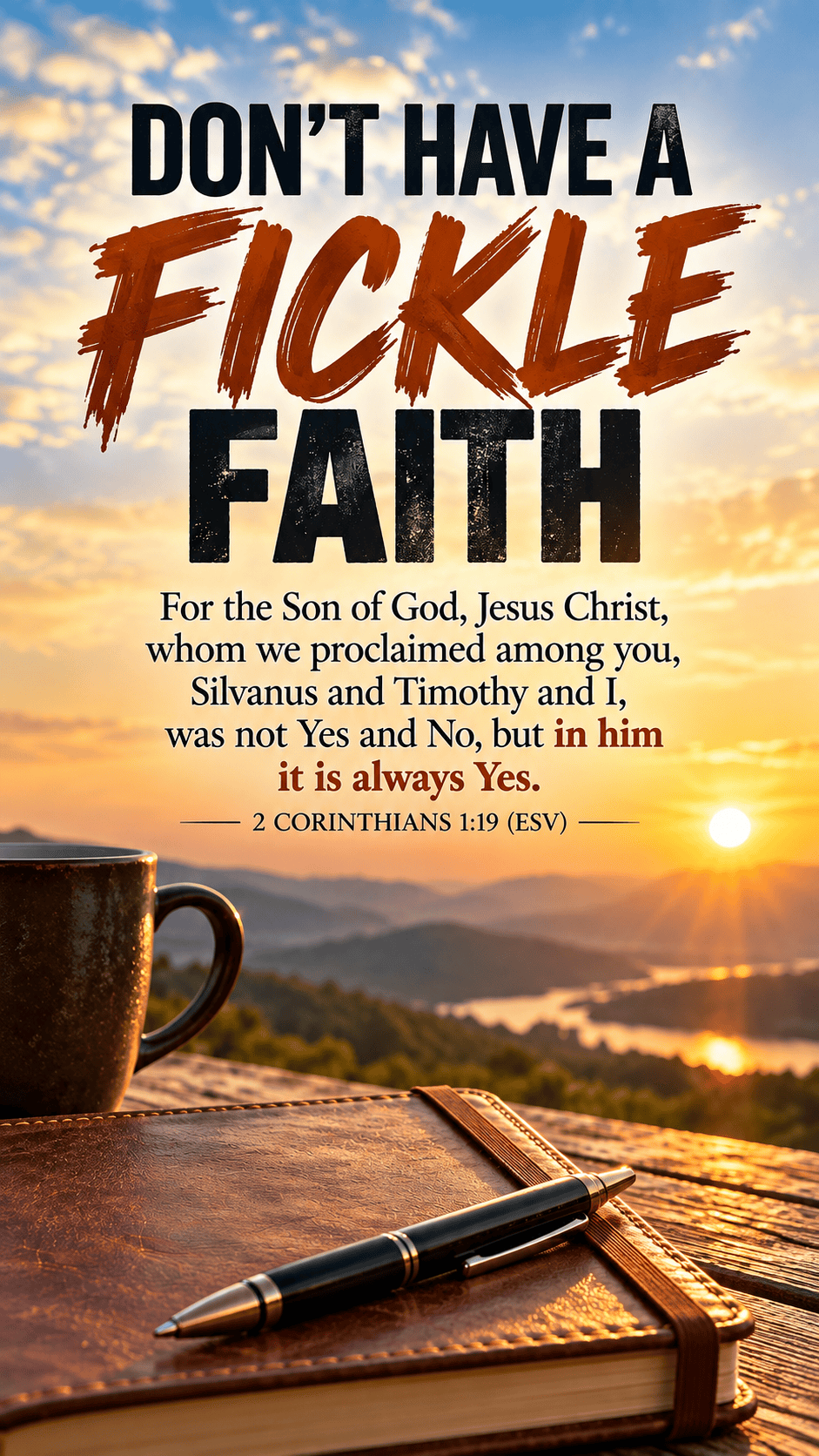
“Was I vacillating when I wanted to do this? Do I make my plans according to the flesh, ready to say ‘Yes, yes’ and ‘No, no’ at the same time? As surely as God is faithful, our word to you has not been Yes and No. For the Son of God, Jesus Christ, whom we proclaimed among you, Silvanus and Timothy and I, was not Yes and No, but in him it is always Yes. For all the promises of God find their Yes in him. That is why it is through him that we utter our Amen to God for his glory.” — 2 Corinthians 1:17–20 (ESV)
Devotional Thought
Have you ever had someone give you their word that they would do something, only to have them fail to follow through? Perhaps they promised to help you with a project, meet you somewhere, or attend something important to you. You counted on them being there, but when the time came, they were nowhere to be found. It seems this kind of behavior has become increasingly common in our world today. Perhaps it’s because our lives have become so busy, or perhaps it’s because we’ve become rather fickle when it comes to our commitments. Whatever the reason, we seem to have become comfortable making promises that we don’t always take seriously.
As we continue through the opening chapter of Paul’s second letter to the Corinthians, we find him addressing a question about his own trustworthiness. Apparently, some of the believers in Corinth were upset because Paul had indicated that he intended to visit them, but those plans had changed. In fact, back in 1 Corinthians 4:19, Paul had written, “But I will come to you soon, if the Lord wills.” Notice those last four words: “if the Lord wills.” Paul had every intention of visiting these believers, but he understood that his plans were subject to God’s will. When his anticipated visit did not take place, some apparently began questioning whether Paul could be trusted to keep his word.
This is why Paul asks, “Was I vacillating when I wanted to do this?” In other words, was he being indecisive or unreliable? Was he the kind of person who would say yes one moment and no the next, depending on what suited him best? Absolutely not! Paul wanted these Corinthians to understand that he wasn’t making decisions according to the flesh, simply doing whatever was most convenient or appealing at the moment. He was seeking to follow the will of God, even when that meant changing plans he had sincerely intended to carry out. Changing our plans because we are seeking to obey God is not the same thing as breaking our commitments because something better comes along.
And that brings us to something I believe Christians need to consider very carefully today. We’ve actually developed a rather casual expression for failing to follow through on our commitments. Have you heard someone say, “Oops, I flaked”? What does that mean? Usually, it means someone canceled at the last minute, didn’t show up, or simply decided not to do what they had promised. And sometimes the explanation is little more than a shrug and a laugh. Perhaps something more enjoyable came along, or perhaps they simply didn’t feel like doing what they had agreed to do. But here’s the question we ought to ask ourselves as believers: What does that kind of behavior communicate about our faith?
Certainly, there are times when circumstances beyond our control prevent us from keeping a commitment. Emergencies happen. Illnesses occur. Sometimes the Lord redirects our plans in ways we could never have anticipated. But that’s quite different from developing a reputation for being unreliable. When we repeatedly fail to keep our word, people eventually stop depending on us. They stop asking us for help or inviting us to participate because they’ve learned that they cannot count on us. And perhaps the greatest problem for believers is that our words and actions reflect upon the God we claim to serve. When we tell someone about the faithfulness of Jesus Christ, but our own lives are characterized by broken promises and careless commitments, we create an unnecessary obstacle to the very Gospel we want them to believe. God’s faithfulness certainly doesn’t depend upon ours, but our inconsistency can make it more difficult for others to take our testimony seriously.
This is why Paul’s next statement is so important. He moves from defending his own integrity to declaring the absolute faithfulness of Jesus Christ. He reminds the Corinthians that the Son of God whom he, Silvanus, and Timothy proclaimed was not “Yes and No,” but that in Christ it is always Yes. Then he makes this remarkable statement: “For all the promises of God find their Yes in him.” What a beautiful reminder! God is not fickle. He doesn’t make promises one day and change His mind the next because something better comes along. He doesn’t abandon His commitments when circumstances become difficult. Every promise He has made finds its fulfillment in Jesus Christ. And because we belong to this faithful God, shouldn’t His faithfulness be reflected in the way we live?
Now, consider the other side of this issue. When someone consistently keeps their word, honors their commitments, and proves themselves trustworthy, people notice. They learn that this is someone they can depend upon. And when they discover that this faithfulness flows from a life transformed by Jesus Christ, what a powerful testimony that becomes! Suddenly, the Gospel we share is being reinforced by the life we live. Our invitation to church carries greater credibility, and our words about God’s faithfulness are supported by the faithfulness others have witnessed in us. No, we will never demonstrate the perfect faithfulness of God, and when we fail, we ought to acknowledge it and make things right. But we should be striving to reflect the character of the One who has called us to Himself.
The bottom line is simple: Don’t have a fickle faith. Be someone whose word means something. Be someone others can depend upon. And above all, let your faithfulness to others point them toward the perfect faithfulness of Jesus Christ.
Reflection Questions
- Have you ever failed to follow through on a commitment simply because something more convenient or appealing came along? What might that have communicated to the person who was depending on you?
- When others think about your character, would they describe you as someone who consistently keeps your word? Are there areas of your life where you need to become more dependable?
- How can your faithfulness in everyday commitments strengthen your Christian testimony and help others see the faithfulness of Jesus Christ?
Closing Prayer
Heavenly Father, thank You for Your perfect faithfulness. You are a God who always keeps Your promises, and in Jesus Christ, every promise You have made finds its fulfillment. Forgive me for the times I have been careless with my commitments or failed to keep my word. Help me to become a person of integrity, someone others can trust and depend upon. Teach me to seek Your will in the plans I make and to honor the commitments I have made. May my words and actions reflect Your character, and may my faithfulness to others become a testimony of Your faithfulness to me. In Jesus’ name, Amen.


Leave a Reply