Scripture Focus
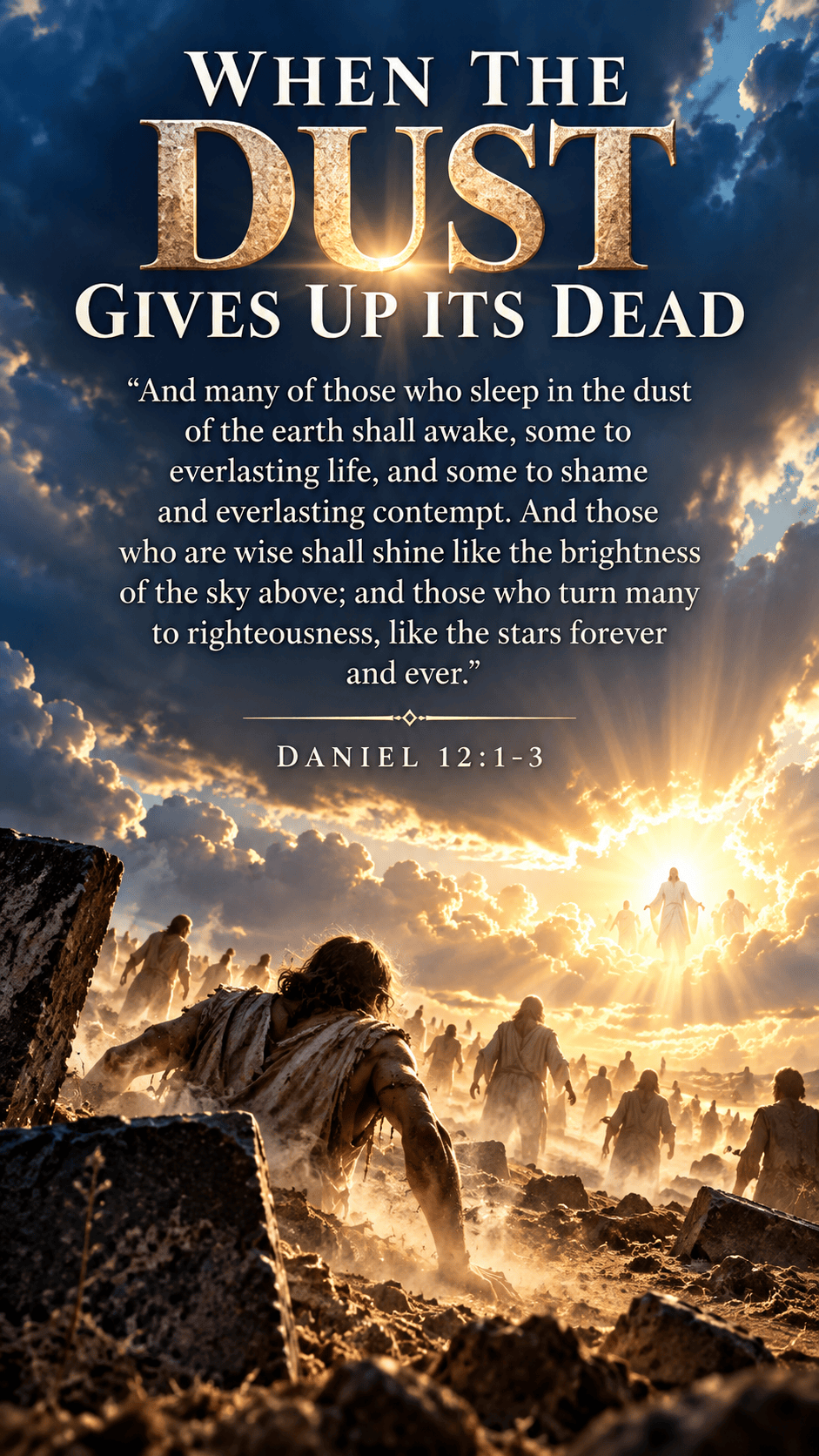
“At that time shall arise Michael, the great prince who has charge of your people. And there shall be a time of trouble, such as never has been since there was a nation till that time. But at that time your people shall be delivered, everyone whose name shall be found written in the book. And many of those who sleep in the dust of the earth shall awake, some to everlasting life, and some to shame and everlasting contempt. And those who are wise shall shine like the brightness of the sky above; and those who turn many to righteousness, like the stars forever and ever.” — Daniel 12:1–3 (ESV)
Devotional Thought
As we begin reading Daniel 12, we might get the feeling that we’ve heard some of these things before. And, in a sense, we have. In Matthew 24 and Mark 13, Jesus describes a time of extraordinary trouble associated with the last days. In Revelation 12, John describes a great battle involving Michael and his angels against the dragon and his angels. And in Revelation 20, we read about the dead standing before God as the books are opened, including the book of life.
These passages are not identical in every detail, but their similarities are remarkable. Daniel was writing more than five centuries before the earthly ministry of Jesus and more than six centuries before John’s vision on the island of Patmos. Yet the same great themes appear throughout these passages: conflict, suffering, divine deliverance, judgment, and the ultimate triumph of God.
For me, these connections provide another reminder of the remarkable unity of Scripture. The God who revealed these things to Daniel is the same God who spoke through His Son and inspired the apostles to write the New Testament. God’s revelation unfolds across centuries, but His purposes remain unchanged.
However, one particular statement in Daniel 12 captures my attention more than anything else. In verse 2, we read that those who sleep in the dust of the earth will awaken, some to everlasting life and others to shame and everlasting contempt. Daniel is describing the resurrection of the dead. We sometimes think of the resurrection as a distinctly New Testament teaching, but here, centuries before the birth of Christ, God reveals that physical death is not the end of human existence. There is a day coming when the dead will rise and every person will face an eternal destiny.
Interestingly, this was still a controversial subject among the Jewish religious leaders during Jesus’ earthly ministry. The Pharisees believed in the resurrection, but the Sadducees rejected it. According to Acts 23:8, they denied the resurrection, angels, and spirits. When I was a boy, we learned a little song called “I Just Wanna Be a Sheep.” One of the lines helped us remember the Sadducees by saying we didn’t want to be one because they were “sad, you see!” It was a silly little play on words, but I’ve never forgotten it. And there is something profoundly sad about a religious belief that leaves no room for the resurrection of the dead.
The Sadducees even attempted to challenge Jesus with a question designed to make the resurrection seem absurd. But Jesus answered them by explaining that they misunderstood both the Scriptures and the power of God. He reminded them that God is not the God of the dead, but of the living (Matthew 22:23–33). Daniel had already declared this truth centuries earlier. Death would not have the final word.
The New Testament expands upon this wonderful promise. The Apostle Paul describes our present bodies as earthly tents, temporary dwellings that will one day be replaced by something far greater (2 Corinthians 5:1–5). In 1 Corinthians 15, he explains that our perishable bodies must put on the imperishable and our mortal bodies must put on immortality. And in 1 Thessalonians 4, he assures believers that those who have died in Christ will rise when the Lord returns.
Think about what that means for those who belong to Jesus Christ. The body that grows weak will one day be raised in power. The body that suffers from disease and pain will be raised imperishable. The grave that seems so final will not be able to hold those whom Christ has redeemed. Because Jesus rose from the dead, those who belong to Him have the promise of resurrection and everlasting life. What an extraordinary hope!
But Daniel’s prophecy also contains a solemn warning. The resurrection is not only a promise of life for the righteous. It also points toward judgment for those who have rejected God. Daniel describes two eternal outcomes: everlasting life and everlasting contempt.
This is why the gospel matters so much. Eternal life is not something we earn through religious activity, moral achievement, or good intentions. It is the gift of God’s grace, received through faith in Jesus Christ, who died for our sins and rose again. Those who trust in Him are forgiven, reconciled to God, and given the promise of everlasting life.
And that brings us to the beautiful words of verse 3. Daniel tells us that those who are wise will shine like the brightness of the sky, and those who turn many to righteousness will shine like the stars forever and ever.
What a wonderful encouragement to live faithfully and point others toward the Lord! Our lives here are temporary, but the work God accomplishes through His people has eternal significance. Every opportunity to share the gospel, every act of faithfulness, and every effort to lead someone toward Christ matters because eternity is real.
As we grow older, we become increasingly aware of how temporary this earthly life really is. Our bodies change. Our strength diminishes. We say goodbye to people we love. And eventually, unless Christ returns first, each of us will face death. But for the believer, death is not the end. It is not even the end of our bodily existence. God has promised a resurrection, and He will keep that promise.
One day, the dust will give up its dead. The graves will surrender those who belong to Christ. And God’s redeemed people will stand in His presence, clothed in resurrection life, never again to experience death, sorrow, or separation. The grave may hold the believer’s body for a season, but it cannot hold it forever. Jesus Christ has already won that victory.
Reflection Questions
- How does the promise of bodily resurrection change the way you think about death and the temporary nature of this life?
- Daniel describes two eternal destinies. How should that truth influence the urgency with which we share the gospel?
- What are you doing today that could have an eternal impact on someone else’s life?
Closing Prayer
Heavenly Father, thank You for the wonderful promise of resurrection and everlasting life through Jesus Christ. Thank You that death does not have the final word and that, because Jesus lives, those who belong to Him will live also. Help me remember that this earthly life is temporary and that my eternal hope rests in Your promises. Give me a greater burden for those who do not know Christ, and help me faithfully share the good news of salvation with them. When I face suffering, loss, or the reality of death, remind me that the grave cannot defeat those whom You have redeemed. May my life point others toward Jesus, and may I live each day with eternity in view. In Jesus’ name, Amen.


Leave a Reply