Scripture Focus
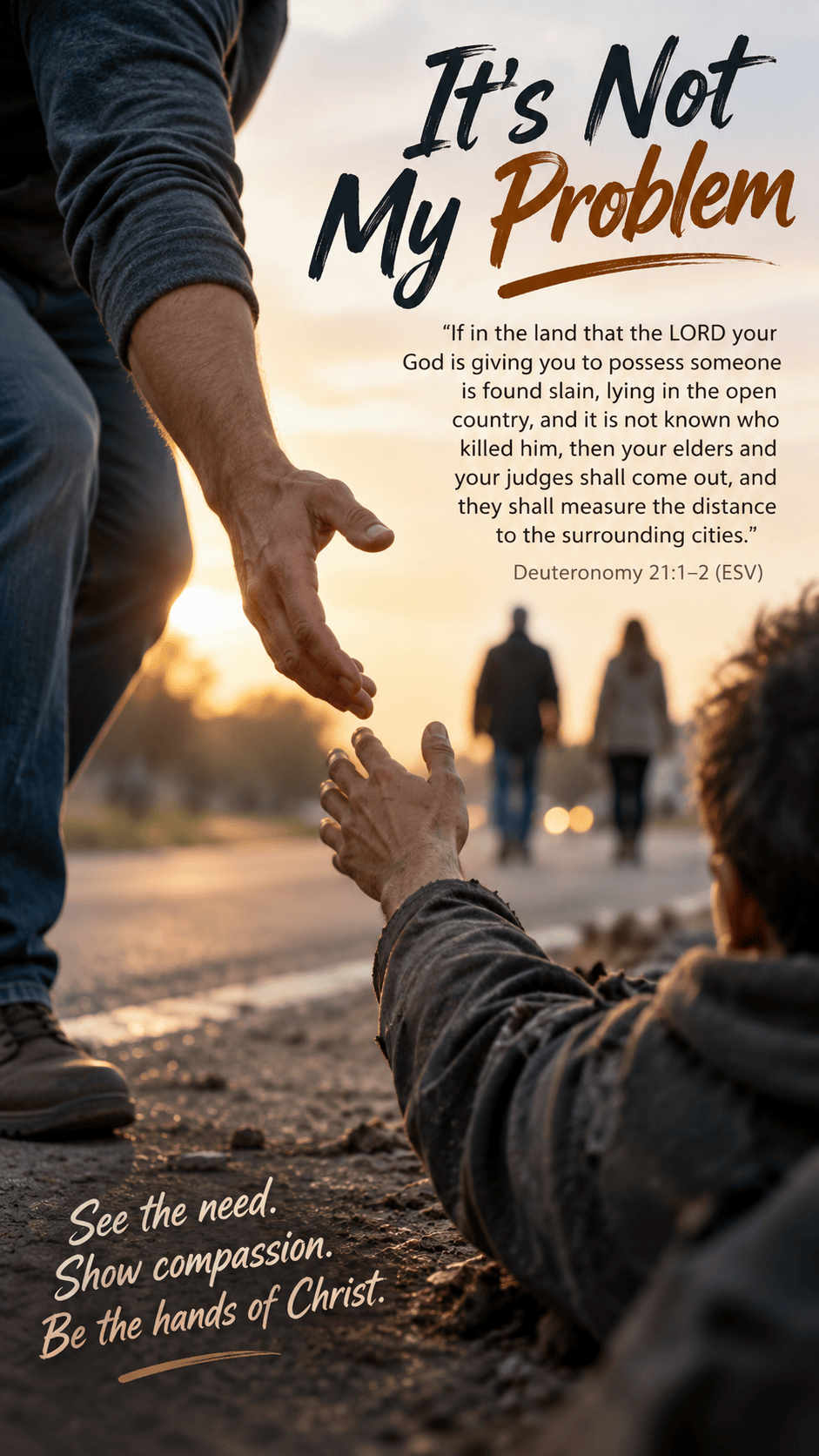
“If in the land that the LORD your God is giving you to possess someone is found slain, lying in the open country, and it is not known who killed him, then your elders and your judges shall come out, and they shall measure the distance to the surrounding cities.” — Deuteronomy 21:1–2 (ESV)
Devotional Thought
Here in Deuteronomy 21, Moses gives Israel instructions concerning an unusual situation that probably didn’t happen very often. Someone has been murdered and their body has been discovered in the open country, but no one knows who committed the crime. If you have a chance, read the rest of the instructions in verses 3–9 because the details are interesting. For our purposes, though, the important point is that the crime remained unsolved. Presumably, every reasonable effort had been made to discover what happened, but no guilty person could be identified.
Today, something like this would immediately become a matter for law enforcement. Police or sheriff’s deputies would secure the scene, gather evidence, interview witnesses, and attempt to identify both the victim and the person responsible. But what happens when all those efforts fail? What happens when no one can be held accountable? God did not allow Israel simply to shrug its shoulders and say, “It’s not our problem.”
The elders and judges were required to become involved. They measured the distance from the body to the surrounding cities to determine which community was nearest. The elders of that city then participated in a ceremony acknowledging the innocent blood that had been shed. They prayed, “Do not put the guilt of innocent blood in the midst of your people Israel” (v. 8). Even though they had not committed the murder and did not know who had, God wanted His people to understand that innocent blood mattered.
That challenges an attitude that can easily develop in us: “It’s none of my business, and it’s not my problem.”
We’ve probably all seen scenes in movies where someone is being attacked while other people stand nearby and do nothing. Perhaps they don’t want to get involved. Maybe they’re afraid. Maybe they’re simply indifferent. Unfortunately, similar things happen in real life. People sometimes see someone being mistreated and decide it would be easier to look the other way.
Most of the situations we encounter won’t be nearly that dramatic. We might notice someone being bullied or mistreated. We may know that someone is being taken advantage of. We might hear something said about another person that we know isn’t true. We may encounter someone who desperately needs help and realize that helping them will require some sacrifice on our part.
That’s when the temptation comes to say, “It’s not my problem.” But that attitude doesn’t fit very well with following Jesus. Jesus told the story of a man who was attacked by robbers and left beside the road. A priest saw him and passed by. Then a Levite saw him and did the same. Neither man had attacked him. Neither man had caused his suffering. Technically, they could have argued that what happened wasn’t their fault.
Then came the Samaritan. He saw the wounded man, had compassion on him, stopped, treated his wounds, took him somewhere safe, and paid for his care. Jesus concluded the story by telling His listener, “You go, and do likewise” (Luke 10:37).
There is an important difference between being responsible for something and having a responsibility toward someone. We cannot fix every injustice in the world, and God has not called us to insert ourselves into every situation we encounter. But neither should followers of Christ become comfortable looking the other way when someone is being hurt simply because helping would be inconvenient.
Deuteronomy 21 reminds us that God cares about innocent people. He cares when someone is wronged. He cares about truth and justice. And if those things matter to Him, they should matter to His people as well.
Sometimes the question isn’t, “Did I cause this?” The better question may be, “Is there something I can do to help?”
Reflection Questions
- Have you ever been tempted to ignore someone’s situation because you felt it wasn’t your problem?
- Why is it sometimes easier to look the other way when we see someone being mistreated?
- Is there someone around you right now who may need you to speak up, offer help, or simply show compassion?
- How does the example of the Good Samaritan challenge the way you respond to the needs and injustices you see around you?
Closing Prayer
Father, forgive me for the times I have seen someone hurting or being mistreated and chosen to look the other way. Give me a heart that cares about the things You care about. Help me to stand for truth, seek justice, protect the innocent, and show compassion to those who need it. Give me wisdom to know when and how I should become involved, and give me the courage to act when You give me an opportunity to help. May I never become so comfortable or indifferent that I can see someone in need and simply say, “It’s not my problem.” In Jesus’ name, amen.


Leave a Reply