Scripture Focus
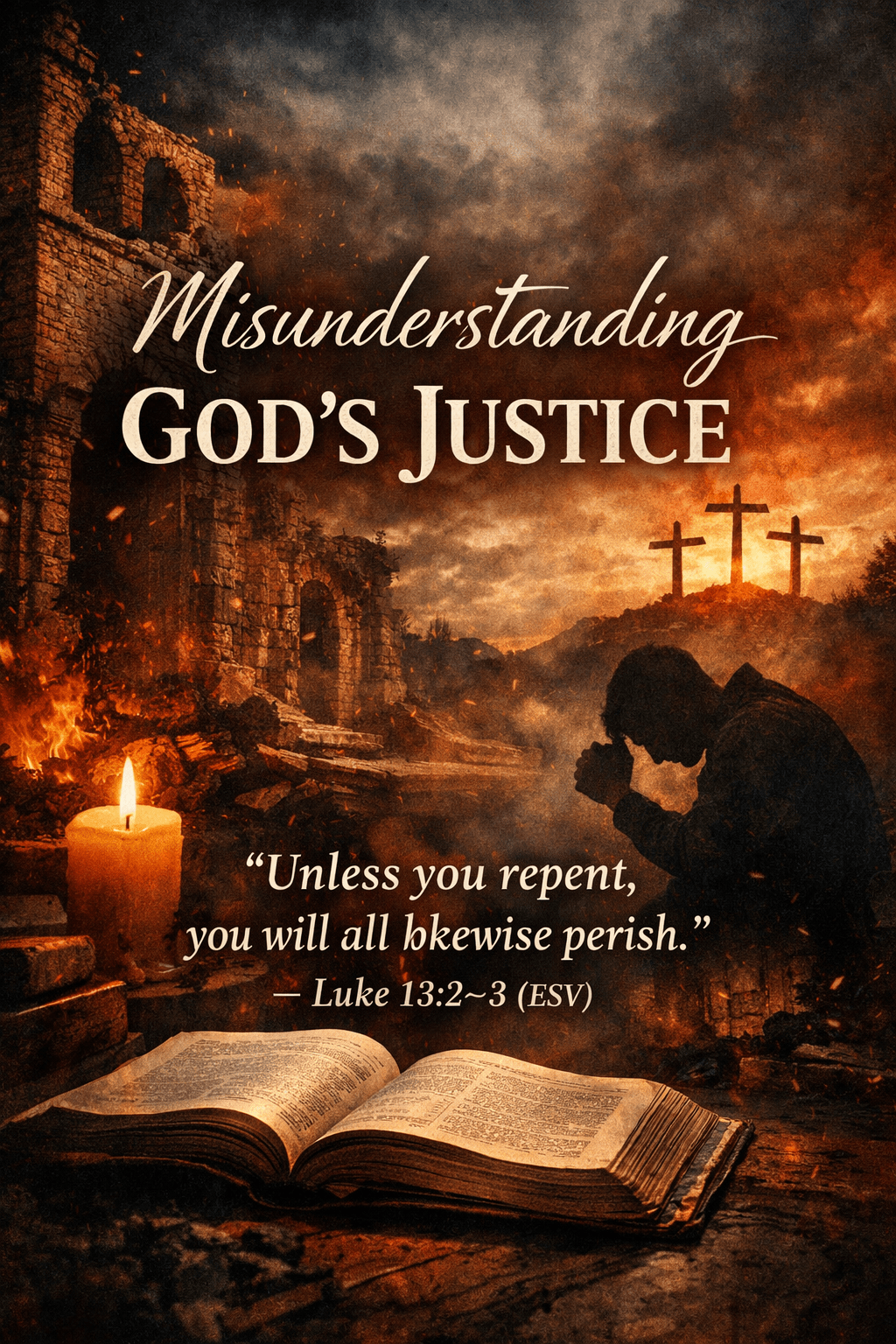
“Do you think that these Galileans were worse sinners than all the other Galileans, because they suffered in this way? No, I tell you; but unless you repent, you will all likewise perish.” — Luke 13:2–3 (ESV)
Devotional Thought
When tragedy strikes, our instinct is often to look for a reason that makes us feel safer. Why them? What did they do to deserve this? If we can explain their suffering as punishment, we quietly reassure ourselves that we are different—better, more deserving, more secure.
Jesus dismantles that line of thinking completely. When He addresses the Galileans who were brutally killed, He makes one thing unmistakably clear: their suffering was not evidence that they were worse sinners than anyone else. Tragedy is not a moral scorecard. Instead of offering speculation or explanations, Jesus redirects the conversation inward. The issue is not their sin—it is ours. “Unless you repent,” He says, “you will all likewise perish.”
Our discomfort with Jesus’ words often reveals a warped view of justice. Deep down, we tend to believe that God owes us a certain quality of life—safety, comfort, protection, or at least explanations when suffering comes. We assume that justice should work in our favor. But Scripture confronts us with a far more sobering truth: God owes us nothing. If He dealt with humanity according to perfect justice alone, none of us would stand.
This is where the gospel shines most brightly. The great miracle is not that God judges sin—that is exactly what a holy and righteous God must do. The true wonder is that He shows mercy at all. Every breath we take, every day we wake up, every opportunity to repent and believe is an undeserved gift of grace. The question is not why some perish, but why any are spared.
Jesus does not invite us to analyze the suffering of others; He calls us to examine our own hearts. Tragedy is not meant to make us proud or secure—it is meant to awaken us. It reminds us that life is fragile, judgment is real, and repentance is urgent. And it points us to Christ, the One who bore judgment so that mercy could be offered freely to sinners like us.
Reflection Questions
1. When you see suffering or tragedy, is your first response to evaluate someone else’s sin—or to examine your own need for repentance?
2. Do you subtly believe that God owes you blessing, protection, or comfort? How does that belief shape the way you respond when hardship comes?
3. How does remembering God’s mercy—rather than demanding His justice— reshape your gratitude, humility, and worship?
4. What specific steps of repentance and renewed faith might God be calling you to take today?
Closing Prayer
Holy God, forgive me for my distorted view of justice. Too often I question You when I should be examining my own heart. Thank You for sparing me, for showing mercy when I deserve judgment, and for offering salvation through Christ. Teach me to live with humility, repentance, and gratitude—never presuming upon Your grace, but always marveling at it. In Jesus’ name, Amen.
 Revcort's Ramblings
Leave a comment