Scripture Focus
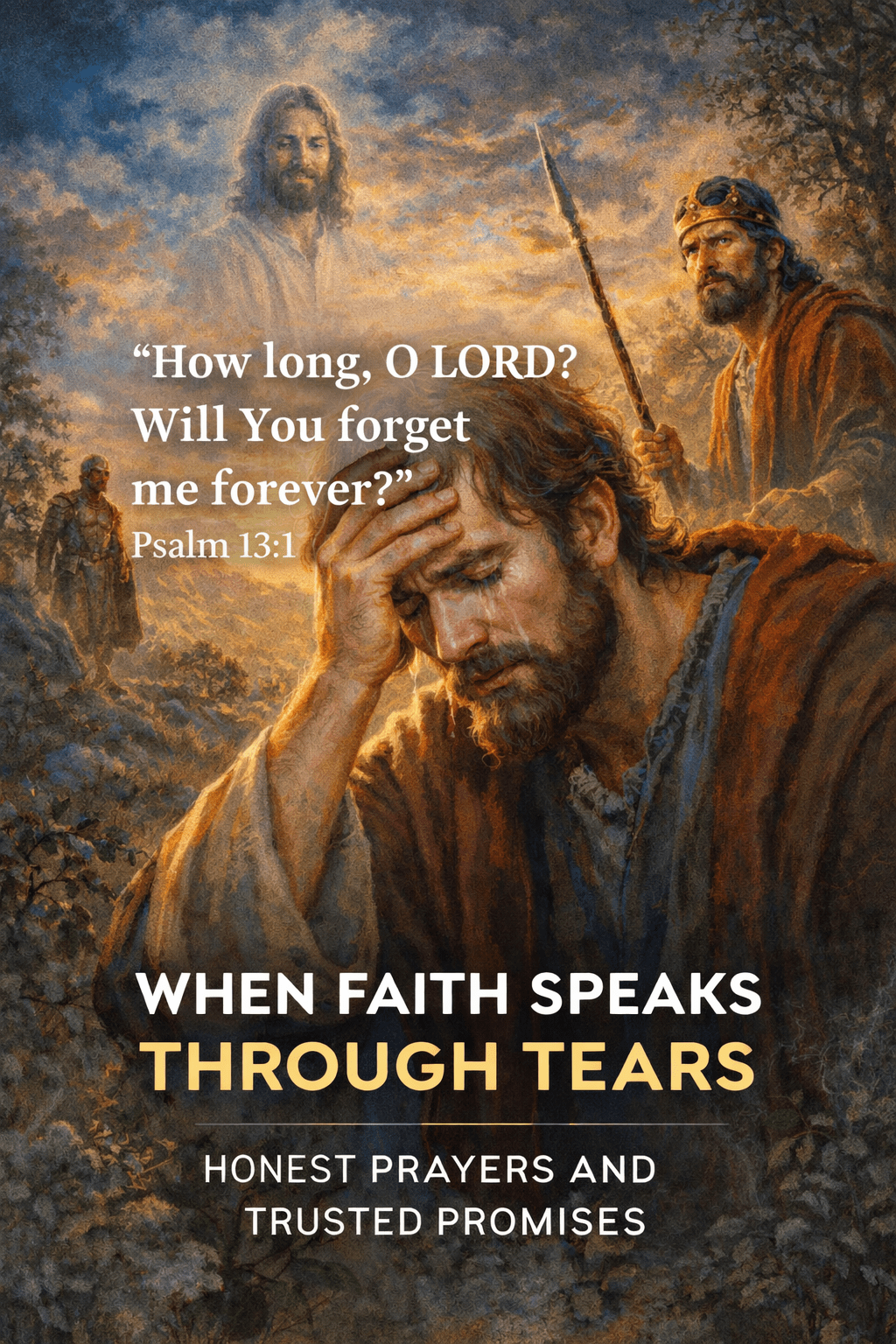
“How long, O LORD? Will You forget me forever? How long will You hide Your face from me? How long must I take counsel in my soul and have sorrow in my heart all the day?” … “But I have trusted in your steadfast love; my heart shall rejoice in your salvation.” — Psalm 13:1–2, 5 (ESV)
Devotional Thought
Psalm 13 reads like an emotional roller coaster. David moves from despair to praise in just six verses. One moment he feels forgotten by God, overwhelmed by sorrow, and threatened by enemies. The next, he is rejoicing in God’s salvation and singing because the Lord has dealt bountifully with him.
At first glance, it almost feels unstable—raw anguish followed by confident worship. But this is not spiritual inconsistency. It is honest faith under pressure.
David does not sanitize his pain before bringing it to God. He does not pretend strength he does not feel. He asks the question that echoes in every hurting heart: “How long?” How long will the silence last? How long will the sorrow linger? How long will it feel like the enemy is winning?
God is not threatened by these questions. In fact, one of the safest places to bring such thoughts is into prayer. David’s lament is not rebellion—it is relationship. He is speaking to God, not away from Him.
Historically, David likely wrote these words while living under the shadow of Saul’s hostility. Though anointed by God, David did not seek power. Though innocent, he was hunted. Though faithful, he suffered. God knew David’s heart—and He knows the heart of all who seek to honor Him. Such people will often face opposition, misunderstanding, and seasons of deep internal struggle.
Yet David does something crucial. He does not end where he begins.
The circumstances may not have changed, but David anchors himself in what has not changed: God’s steadfast love, God’s salvation, God’s faithful provision. Faith does not deny pain—it chooses where to stand while pain is still present.
This psalm teaches us that worship can rise from sorrow, and praise can coexist with unanswered questions. God already knows our hearts. Our honesty does not shock Him. And like David, we can move from lament to trust—not because life suddenly makes sense, but because God remains faithful.
Reflection Questions
- What emotions in Psalm 13 resonate most deeply with your current season of life?
- Do you feel free to express your honest feelings to God, or do you tend to hide them? Why?
- What truths about God can you cling to when circumstances remain unresolved?
- How might choosing trust—even before relief—shape your prayers today?
Closing Prayer
Lord, you know my heart better than I do. You see my sorrow, my questions, and the weight I carry. Teach me not to fear bringing my honest cries to You. Help me trust Your steadfast love when I feel forgotten, and rejoice in Your salvation even when answers delay. You have dealt bountifully with me—and I will sing, even through tears. Amen.
 Revcort's Ramblings
Leave a comment