Scripture Focus
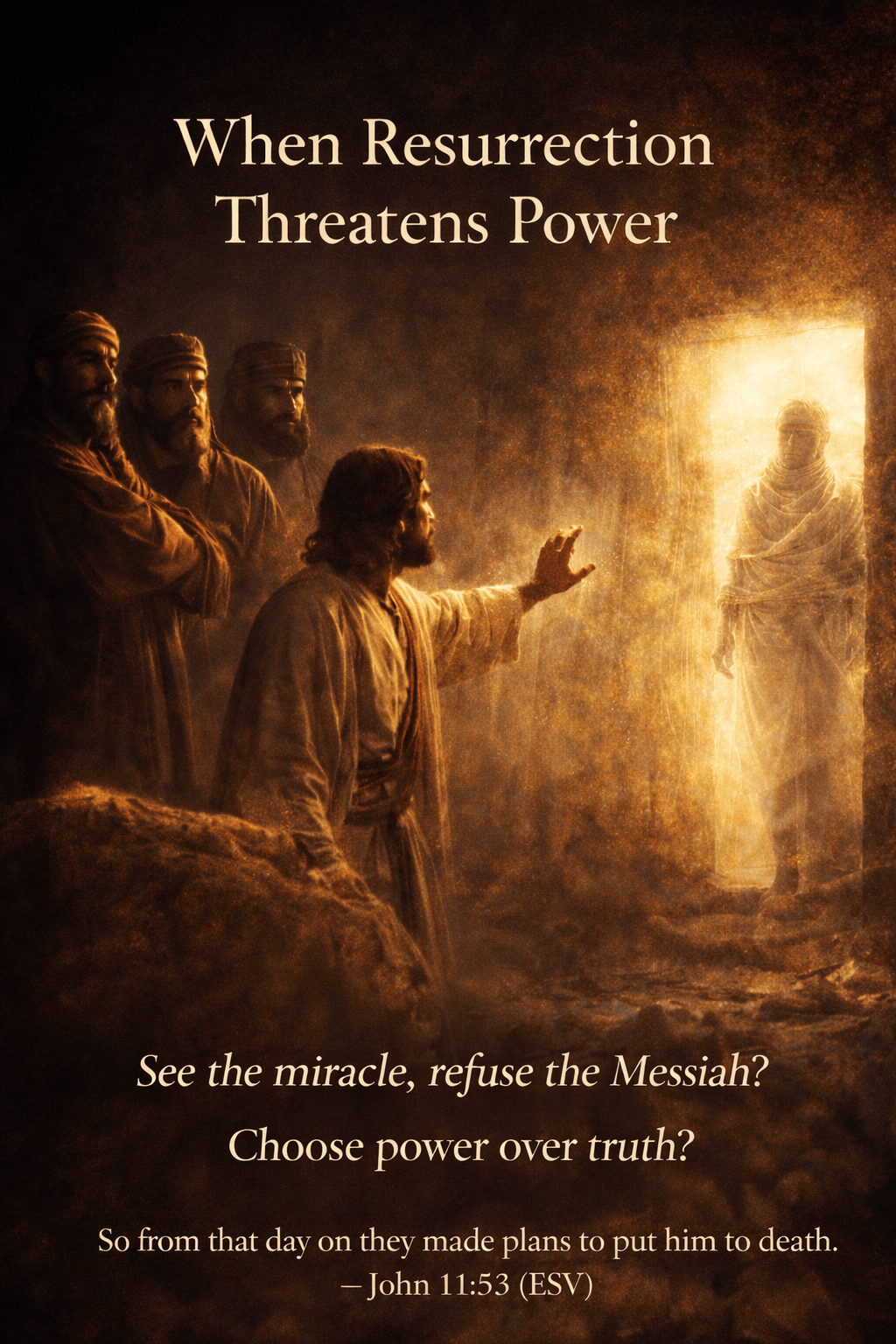
“So the chief priests and the Pharisees gathered the council and said, ‘What are we to do? For this man performs many signs. If we let him go on like this, everyone will believe in him…’ So from that day on they made plans to put Him to death.” — John 11:47–53 (ESV)
Devotional Thought
The raising of Lazarus marked a turning point in the ministry of Jesus—not because it clarified His identity, but because it exposed the hearts of those who opposed Him.
Until this moment, hostility toward Jesus had been real but scattered. There were threats, confrontations, and attempts to silence Him, yet no unified resolve to end His life. But when a man dead for four days walked out of a tomb, something shifted. The miracle could not be dismissed, minimized, or explained away. Resurrection does that—it removes all safe excuses.
What is most striking about the council’s discussion is what they do not talk about. There is no serious debate over whether Jesus might actually be the Messiah. No wrestling with the possibility that God is at work. No trembling at the thought that divine power has been displayed before them. Their concern is entirely practical and political: What will happen to us if people believe Him?
Their fear is not Roman oppression—it is the loss of influence. They speak of “our place” and “our nation,” revealing that what they truly fear losing is their authority, their status, and their control. The miracle of life does not soften them; it threatens them.
Caiaphas’ words are chilling in their irony. He speaks truth without faith, prophecy without repentance. God uses his position to declare what Caiaphas himself does not understand—that Jesus would indeed die for the people, and not for Israel alone, but to gather the children of God scattered across the world. Yet Caiaphas’ motive is not salvation, but self-preservation. He is willing to sacrifice truth to protect power.
Here lies a sobering warning. It is possible to be close to holy things and yet remain hostile to holiness itself. It is possible to witness undeniable evidence of God’s work and still resist Him—if obedience threatens our sense of control. The council’s problem was not ignorance. It was refusal.
From this moment forward, the path to the cross is no longer accidental or reactive. It is intentional. Resurrection life has been revealed—and the guardians of religious power choose death instead.
Reflection Questions
- Why do undeniable works of God sometimes harden hearts instead of softening them?
- In what ways can concern for position, influence, or comfort blind us to truth?
- How does Caiaphas’ prophecy reveal the difference between God’s purpose and human motive?
- Are there areas where following Christ might feel threatening to personal control or reputation?
Closing Prayer
Lord God, Search my heart where fear of loss may outweigh love for truth. Keep me from resisting Your work when it challenges my comfort or control. Give me humility to rejoice in Your power rather than protect my own place. Let me never stand near resurrection and still choose resistance. Amen.
 Revcort's Ramblings
Leave a comment